



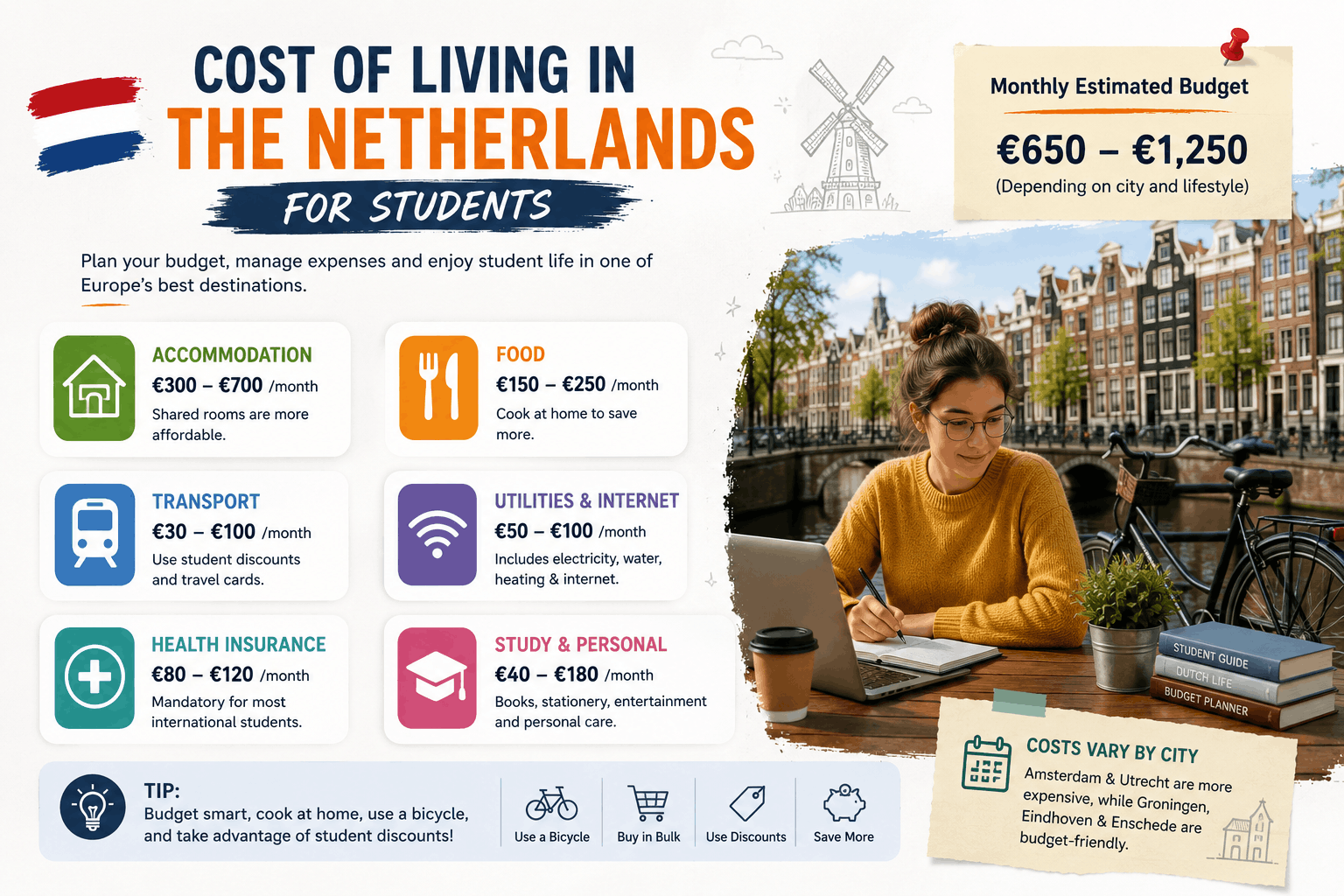
The Netherlands has emerged as a most advantageous study destination for international students due to excellent education system, stylish cities, cultural ambience and abundant job prospects. Every year, thousands of students relocate to the Netherlands to follow an undergraduate, postgraduate and professional degree. Although being in a country like the Netherlands with a great number of benefits is certainly a step up for some students, it’s crucial to know the cost of the location before they can start studying in that country. Living expenses can vary based on:
• city
• lifestyle
• accommodation type
• transport
• individual spending habits
Although the Netherlands is relatively cheaper than some of the top study destinations, international students need to financially plan and manage their expenses with good financial planning so that they can afford it. As a college student living abroad, how it costs the Netherlands is a common guide to the living standards in a world of affordable and beautiful scenery.
What Determines the Cost of Living in the Netherlands?
It lists: dormitories, food, transportation, groceries, medical services and utilities along with tricks for budgeting. Is it Hectic when it comes to students? In comparison to countries like the United States and the United Kingdom, the Netherlands is occasionally viewed as moderately affordable at least for students. But the overall cost depends heavily on:
• the city where you live
• your expenditure habits
• accommodation choices
• personal lifestyle
Students from bigger cities can spend more than students from smaller towns or student-friendly areas. Before you travel overseas, good financial planning is extremely valuable.
Accommodation Costs for Students in the Netherlands
The biggest expense associated with accommodation of most students in the Netherlands is the most usual amount of money they spend for the most part on accommodation. Some examples are:
• Student housing
• Shared apartments
• Private apartments
• University residence halls
• Homestay accommodation
Accommodation costs are frequently determined by:
• location
• room size
• facilities
• type of housing
Students living in large cities might have higher housing costs due to demand. International students tend to be cost-effective when living arrangement is shared accommodation. Most students start looking early for housing because it can get competitive.
Food and Grocery Expenses in the Netherlands
Costs of food may fluctuate according to lifestyle and eating behaviours. Students who cook at home more often may spend less than those who eat in restaurants or order food online a lot. Food costs may include:
• Groceries
• Snacks
• Restaurant meals
• Drinks
• Fast food
International students can save on food expenses by:
• cooking at home
• purchasing groceries in bulk
• using student discounts
• planning meals properly
There’s also affordable supermarkets in many cities in the Netherlands for students.
Transportation Expenses for International Students
The Netherlands is famous to be a transport city. Students commonly use:
• Bicycles
• Trains
• Buses
• Trams
• Metro services
Cycling is extremely popular among students because it is affordable and convenient. Many college students buy second-hand bicycles to save money. Students may also benefit from:
• transport discounts
• student travel cards
• monthly transport subscriptions
Getting near campus can also decrease transportation costs considerably.
Internet and Utility Bills in the Netherlands
Students in private accommodation may be required to pay utility bills separately. Utility expenses may include:
• Electricity
• Water
• Heating
• Internet services
Students in shared apartments may work with roommates to divide utility expenses. It is essential to have access to the Internet for:
• online classes
• assignments
• communication
• research activities
Students should compare internet service providers carefully before picking the plan.
Healthcare and Insurance Costs for Students
The Cost of Medical and Insurance Care. However, international students in the Netherlands may need health insurance according to their situation or duration of stay. Expenses tied to healthcare may comprise:
• Health insurance
• Medical consultations
• Prescription medications
• Emergency healthcare
Students should routinely verify healthcare and insurance needs before moving. To stay safe and comply with the law, it is important to be insured.
Study Materials and Academic Expenses
Students can also invest in academic resources such as:
• Books
• Laptops
• Stationery
• Software tools
• Printing services
Certain subjects or even classes may require specific materials. To lower academic costs for students, you can:
• buying used books
• using digital resources
• borrowing from libraries
Entertainment and Lifestyle Spending
Students spend in addition to academic spending on leisure activities. These may include:
• Gym memberships
• Movies
• Travel
• Shopping
• Social activities
Careful balancing entertainment spending can allow students to keep a better financial balance.
Best Student Cities in the Netherlands
Netherlands students go to more student-friendly and affordable cities than others. Some student-friendly cities include:
• Groningen
• Eindhoven
• Nijmegen
• Enschede
• Rotterdam
• Leeuwarden
The large cities may offer more opportunities, while even smaller cities can afford far lower living costs. Students should research cities extensively prior to choosing a university.
Can International Students Work While Studying in the Netherlands?
Under specific circumstances there are various conditions when international students in the Netherlands can work part-time. Students commonly work in:
• Retail
• Hospitality
• Customer service
• Delivery services
• Student support jobs
Students can use part-time jobs to:
• support personal expenses
• gain work experience
• improve communication abilities
Nevertheless, students should properly balance work and study responsibilities.
Scholarships That Help Reduce Living Costs
One of the common scholarships we offer foreign students are scholarships that can alleviate some of the financial pressure for international students. Some of the usual scholarship opportunities are:
• Holland Scholarship
• Orange Knowledge Programme
• University scholarships
Scholarships may help cover:
• tuition fees
• accommodation
• living expenses
• academic materials
Early applications are required. Scholarship opportunities can still be competitive so keep up.
Budgeting Tips for International Students in the Netherlands
Students living abroad must budget appropriately. Appropriate budgeting tips include:
• Track monthly spending
• Cook at home regularly
• Use student discounts
• Avoid unnecessary expenses
• Share accommodation if you can
• Buy second-hand items
• Use bicycles rather than road transport
Simple financial decisions add up.
Financial Challenges International Students May Face
Sometimes international students face the following financial challenges:
• Unexpected expenses
• High accommodation demand
• Fluctuations of the currency exchange
• Scarce part-time work
Having financial preparedness before moving can lessen stress down the line. Students need to keep emergency funds whenever possible.
Benefits of Studying in the Netherlands Despite the Cost of Living
Living is expensive sometimes but there are many long-term benefits of studying in Holland. Benefits include:
• High-quality education
• International exposure
• Qualifications recognized worldwide
• Career opportunities
• Multicultural environment
• Modern learning systems
For many students the educational and career benefits are worth the investment.
Important Advice for Students Moving to the Netherlands
Students interested in moving should:
• Act on searching for accommodation ahead of time
• Watch out for living costs
• Prepare a realistic budget
• Apply for scholarships
• Consult official university information
• Avoid financial scams
• Discover basics of financial management
Preparation enables students to acclimate to living overseas more easily.
Key Takeaways on the Cost of Living in the Netherlands
To be as relevant as possible for students, the cost of living in the Netherlands relies on a number of things as city, home ownership, transportation and personal lifestyle. Student expenses often include some of the following:
• Housing
• Food
• Transportation
• Healthcare
• Internet and utilities
• Study materials
While cities are generally more expensive than others, good budgeting and fiscal policy will assist international students in following all expenses. The Netherlands is one of Europe’s best places for international students to stay due to its high standard of education, foreign options, and student-friendly atmosphere. With a little planning, and some smart budgeting, students can experience the good life while also being successful academically in the Dutch milieu.