


Nobody actually feels ready when they start freelancing. Not the person making six figures on Upwork today. Not the designer with 300 five-star reviews. Not the writer who quit their 9-to-5 two years ago. They all had a moment where they thought, “I’m not experienced enough for this” — and did it anyway.
If you’re sitting on that same thought right now, this guide is going to be pretty useful for you.
The Biggest Myth About Freelancing
Here’s what most people get wrong before they even begin: they assume every client out there is hunting for someone with a decade of experience and a portfolio full of big brand names.
Some clients are. Most aren’t.
The average client posting a job on Fiverr or Upwork just needs someone who can:
Actually solve the problem they’re posting about
Show up, communicate, and not ghost them mid-project
Deliver work that does what it’s supposed to do
Follow a brief without needing their hand held the whole way
That’s the bar. It’s not low, but it’s also not what most beginners imagine it to be. The real issue isn’t that you lack experience — it’s that you’re so focused on what you don’t have that you haven’t stopped to ask what the client actually needs from you.
Can You Really Start With Zero Experience?
Yes. And I mean that without any motivational-poster energy behind it.
There are freelancers right now — good ones, busy ones — who started with:
– No portfolio
– No past clients
– No professional background in their chosen field
What they had was one skill they were willing to develop, and enough stubbornness to keep going past the awkward early stage. That’s genuinely it.
You don’t need to be exceptional to get your first client. You need to be useful. And useful is something you can become a lot faster than you think.
Pick One Skill — Just One
This is where a lot of beginners quietly sabotage themselves. They spend the first month trying to learn writing, design, and SEO simultaneously, make slow progress on all three, and eventually burn out without landing anything.
Pick one skill. Commit to it for at least a few months before even thinking about expanding.
Good starting points include:
– Content writing
– Graphic design
– Social media management
– Virtual assistance
– Video editing
– Web design
– Data entry
– Digital marketing
Which one should you pick? Honestly, the one you’d be least miserable practicing on a Tuesday evening when you’re tired. Motivation fades fast — genuine interest lasts a lot longer.
Free Beats Expensive When You’re Just Starting
Don’t spend money on courses yet. Seriously. The internet has more free, high-quality learning content than any one person could get through in a lifetime.
Start with:
– YouTube tutorials — genuinely underrated for learning practical skills fast
– Free courses from Google, HubSpot, Coursera, and similar platforms
– Blogs and guides written by freelancers who are actually doing the work
– Just… making things, even badly, and figuring out why they’re bad
The mistake most beginners make is treating watching tutorials as the same thing as learning. It isn’t. You can watch 40 hours of design videos and still not know how to design anything. The only thing that actually builds skill is sitting down and making something — even when it looks terrible at first.
Build a Portfolio Before Anyone Hires You
“But how do I build a portfolio if I have no clients?”
You make stuff up. In the best possible way.
– Writers: write two or three articles on subjects you actually know something about
– Designers: create logos and brand concepts for fictional companies
– Social media managers: build a sample content calendar and design a few mock posts
– Web designers: build a site for an imaginary business, or offer to help a local one for free
No client is going to audit whether your portfolio pieces were paid jobs. They want to see that you can do the work. Three focused, well-made samples will open more doors than an empty profile with a long explanation of why you don’t have samples yet.
Get Your Profile Up on Freelance Platforms
Once you have something to show, go where the clients already are. You don’t need accounts everywhere — pick one or two platforms and actually put effort into them.
The main ones worth starting with:
– Upwork
– Fiverr
– Freelancer
– PeoplePerHour
When you write your profile, resist the urge to sound grand. Be specific and plain instead — tell people exactly what you do, what problem you solve, and how working with you makes their life easier. Clients aren’t looking for flowery language. They’re looking for someone who understands what they need.
Landing That First Client
This is the stage where most people give up, usually about a week in. They send a few proposals, get ignored, and conclude that freelancing doesn’t work for them.
What actually works:
– Send proposals every day, not just when you feel inspired
– Write each one specifically for that job — generic pitches get deleted without being read
– Target smaller, simpler projects first — less competition, lower stakes, easier to win
– Stop expecting your first gig to be impressive — just get one
Your first project might pay almost nothing. That’s fine. What it gives you is a real review from a real client, actual experience you can talk about, and proof — mostly to yourself — that this is something you can do. That matters more than the payout.
Mistakes Worth Knowing About Early
Most beginners trip over the same things. Worth flagging them now so you don’t have to learn them the hard way:
– Trying to master multiple skills at once and mastering none of them
– Quitting during the slow early weeks before any momentum has built
– Skimming client briefs and delivering something they didn’t ask for
– Charging rates that don’t match your current level because it feels better
– Going quiet when a client is waiting to hear from you, then losing the relationship
None of these are the end of the world. But they’re all avoidable, and avoiding them saves you weeks of frustration.
Communication Will Take You Further Than You Expect
Here’s something most freelancing guides gloss over: in the early stages especially, how you communicate matters as much as how well you do the actual work.
Think about what it’s like to hire someone you’ve never met off the internet. You’re hoping they don’t disappear, don’t misunderstand the brief, and actually come back with something usable. Your job is to be the person who makes that anxiety go away.
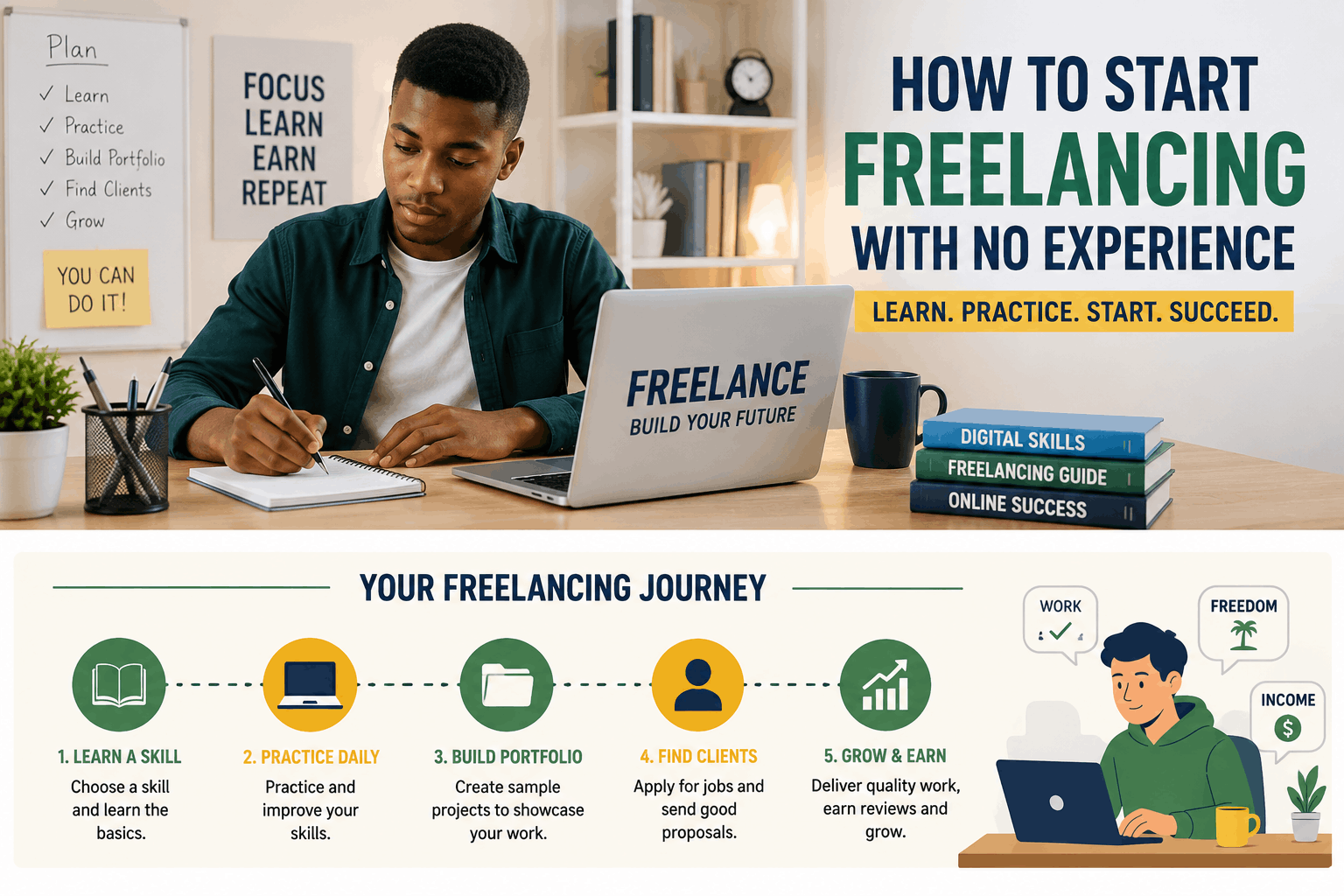
Clients keep coming back to freelancers who:
– Reply the same day — not three days later
– Ask a smart question when something’s unclear rather than guessing and getting it wrong
– Send a quick progress update without being asked for one
– Hand things in when they said they would, every single time
You’d be surprised how rare this is. If you can do these things consistently, you’ll stand out — even when your actual skill level is still catching up.
A 30-Day Plan That Actually Works
If you want something concrete to follow, here’s a simple month-by-month breakdown:
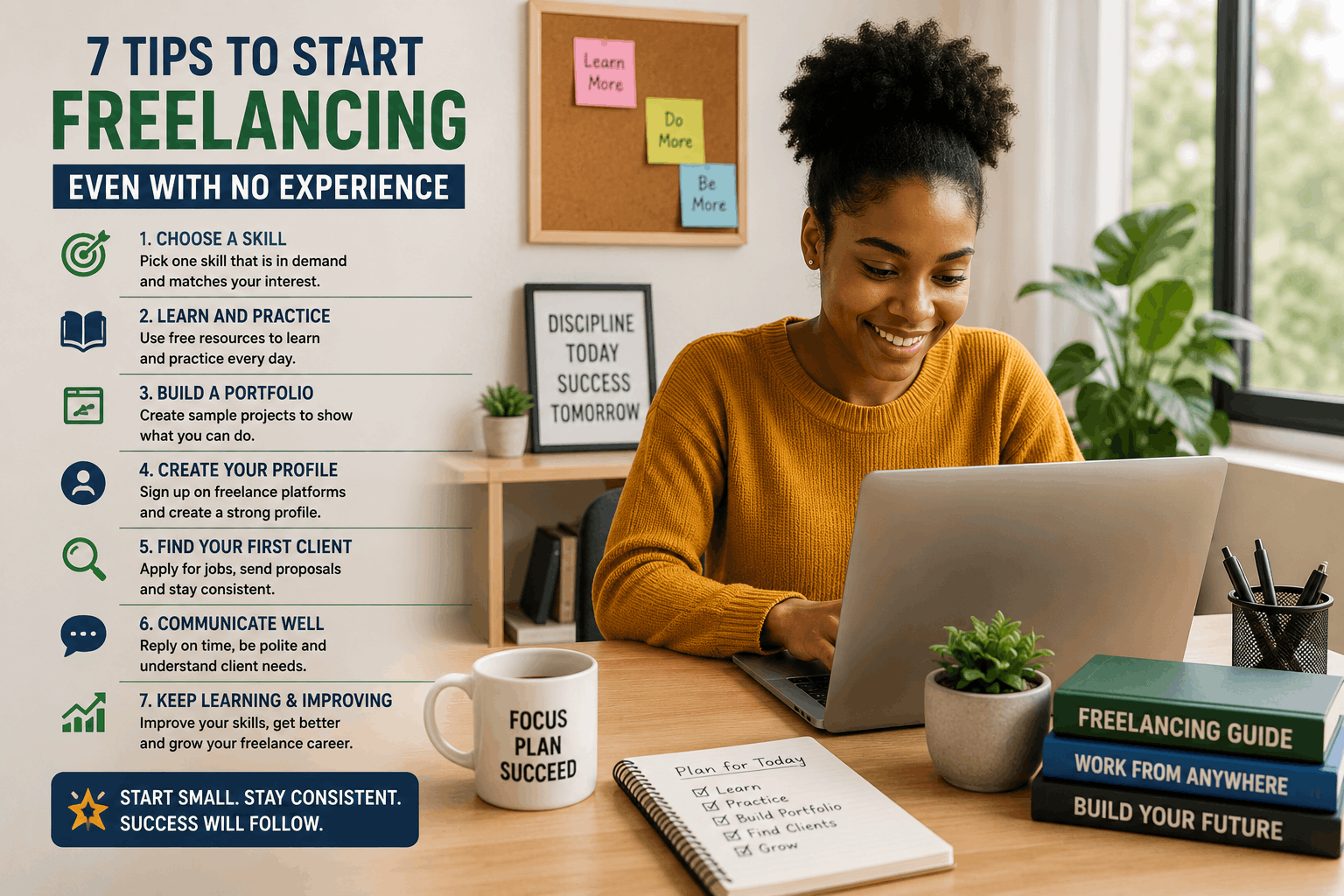
Week 1 — Learn
– Lock in your one skill and don’t second-guess it
– Find your free learning resources and actually start
– Don’t just watch — try things as you go
Week 2 — Practice
– Make something every day, even if it’s rough and embarrassing
– Push through until you have two or three samples you wouldn’t be ashamed to show
Week 3 — Set Up
– Pull your samples into a simple portfolio
– Create your profile on one or two freelance platforms
Week 4 — Apply
– Start sending proposals daily
– Pay attention to what’s working and adjust
– Keep making things even while you wait for responses
A month of consistent effort — not inspired bursts, just consistent daily effort — puts you in a position most people who’ve been “thinking about freelancing” for years never reach.
It Takes Longer Than You Want It To
Worth being honest about this: freelancing doesn’t usually pay off immediately. Some people get their first client in two weeks. Some take three months. Neither experience means you’re doing it wrong.
The freelancers who build something real aren’t necessarily more talented than the ones who quit. They’re just the ones who kept going through the slow, uncertain stretch where nothing seemed to be happening yet.
Keep showing up by:
– Practicing your skill even when there’s no immediate reward for it
– Improving a little with every piece of work you produce
– Sending proposals without waiting to feel ready
– Trusting that consistency compounds over time
The results do come. They just don’t usually arrive on your preferred schedule.
Quick Summary
You don’t need experience to start. You need a skill, a few samples you made yourself, and enough persistence to keep applying until someone gives you a shot.
The short version:
– Pick one skill and go deep on it
– Learn through free resources and actually practice
– Build sample work before you have any real clients
– Create a focused, honest profile on a freelance platform or two
– Apply consistently, personalize every proposal, and don’t stop
Every freelancer you look up to was once exactly where you are — uncertain, inexperienced, and not sure if it was going to work out. The only thing that separated them from the people who stayed stuck is that they started anyway.