

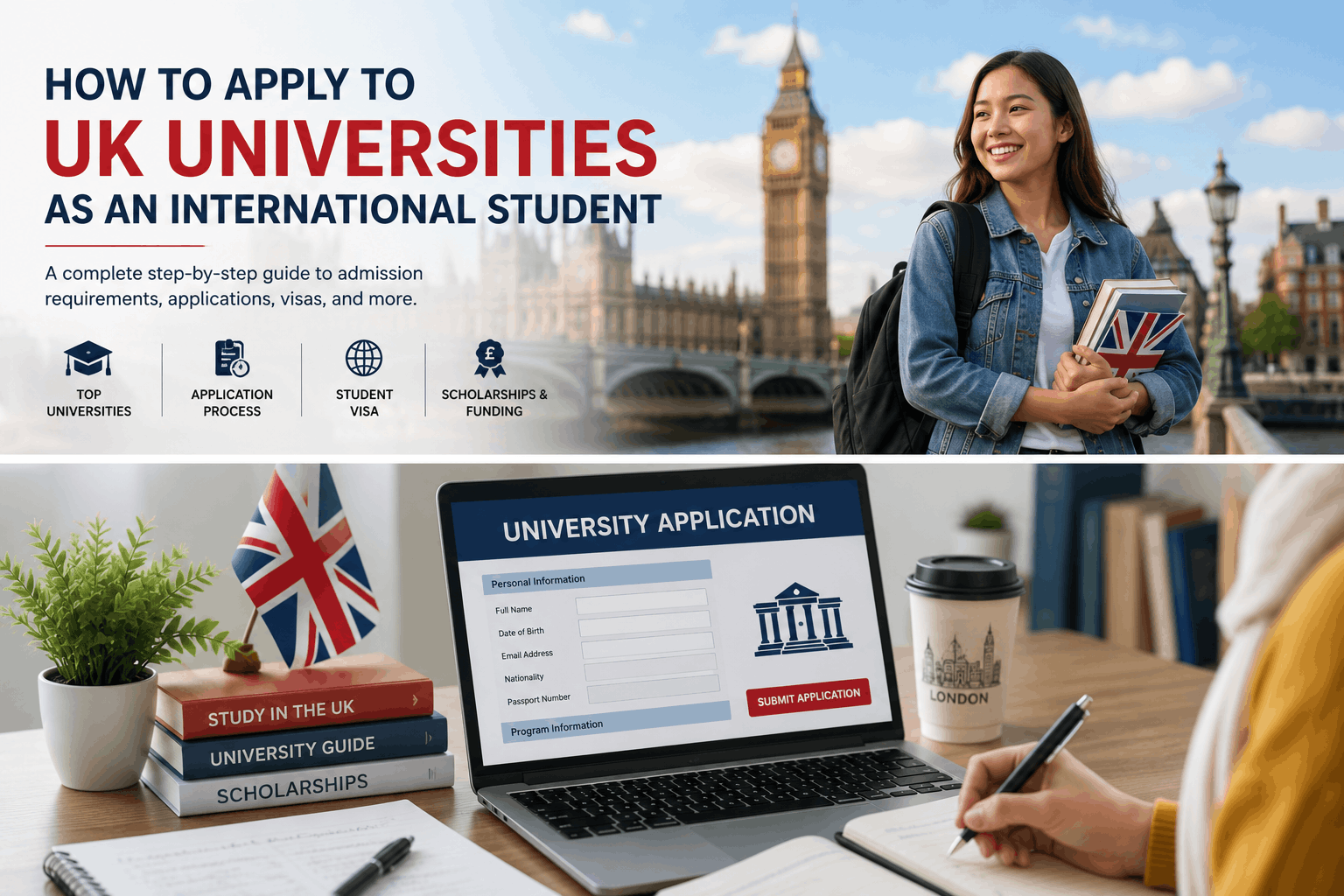

The United Kingdom is still one of the most loved places for international students who want a solid and rewarding education, world experience and jobs.
Every year thousands of students from various countries apply to UK universities to study undergraduate, postgraduate and professional modules.
UK Universities are known for:
• Academic excellence
• Globally recognized degrees
• Modern learning facilities
• Strong research opportunities
• Multicultural student communities
UK studies are not only about education for many students, they are also about:
• Personal transformation
• Global experience
• Career planning
But the application process can be confusing in some cases for first-time international applicants.
Students may find themselves with questions about:
• Admission requirements
• Application procedures
• Tuition fees
• Scholarships
• Student visas
• English language tests
Knowing the right kind of application process can keep students from making errors and raise their chances of gaining admission.
We recommend having a guide such as this one to help international students apply to UK universities.
Why Study in the UK
The UK continues to appeal to international students due to its stellar academic quality and variety of opportunities.
Here are a few the primary ones students go for:
• Universities well known around the world
• Education system of high quality
• Shorter course durations
• Multicultural environment
• Research opportunities
• International networking
• Career development opportunities
• Post-study work opportunities
Lots of UK universities in the future also have tight links to the industries/employers providing career options and industry contacts for the next generation of students to understand real work and apply what they learn.
The Most Popular Universities in the UK
There are some good internationally well known universities in the UK.
Some of the most reputable institutions are:
• University of Oxford
• University of Cambridge
• Imperial College London
• University College London
• University of Manchester
• University of Birmingham
• University of Leeds
• University of Glasgow
These universities have programs in fields including:
• Medicine
• Engineering
• Business
• Law
• Nursing
• Computer science
• Social sciences
Types of Programs International Students Can Apply For
International students can apply to different levels of education depending upon the qualifications of their training.
Undergraduate Programs
These are bachelor’s degree programs usually completed following secondary school.
Postgraduate Programs
These include:
• Master’s degrees
• Postgraduate diplomas
• Doctoral programs
Foundation Programs
Foundation courses benefit students who may not meet full criteria for the entry to university.
Professional Courses
Some students apply for:
• Healthcare programs
• Business certifications
• Vocational courses
• Professional training programs
Requirements for UK University Applications
Admission conditions will be determined by:
• University
• Course
• Academic level
Common requirements, however, typically consist of:
• Valid passport
• Academic transcripts
• English language test results
• Personal statement
• Recommendation letters
• Curriculum vitae or resume
• Portfolio for creative courses
A few of these competitive programs need additional entrance tests or interviews.
English Language Requirements
Most UK institutions require evidence of an applicant’s English ability.
Common accepted tests include:
• IELTS
• TOEFL
• PTE Academic
• Duolingo English Test
Different universities and programs may need different scores.
Students should always check language requirements through the websites of the official university.
Choosing the Right UK University
Choosing the right university constitutes an important decision for students.
They should be mindful of such things as:
• Course quality
• University ranking
• Tuition fees
• Scholarship opportunities
• Location
• Accommodation options
• Career opportunities
• Student support services
It’s imperative for students not to choose universities because of popularity only.
Course content research and future job prospects/benefits is essential.
How to Apply to UK Universities
Application may differ for some courses and institutions.
Research Universities and Subjects
First they identify best universities and courses that are suitable for their career goals and academic background.
Areas for research worth your time include:
• Admission requirements
• Application deadlines
• Tuition fees
• Scholarship opportunities
• Course structure
Research, proper research or not, it will just help students plan.
Prepare Required Documents
A priori preparation of documents reduces application stress.
Important documents can include:
• Academic certificates
• Passport copy
• Recommendation letters
• Personal statement
• English test scores
• Resume or CV
Students have to get all the papers correct and prepared as a professional.
Write a Good Personal Statement
A statement of personality is one of the strongest components in a university application.
Students should explain:
• Academic goals
• Career plans
• Reasons for choosing the course
• Why they want to study in the UK
• Relevant achievements
Strong personal statement can have the ability to greatly affect admission opportunities.
Submit Applications
Applications can be filed at, for example:
• Via universities’ webpages
• Via UCAS for undergraduate applications
UCAS is the centralized system which universities use for their applications in the UK.
They have to follow very closely the instructions when they fill in forms.
Attend Interviews If Required
Some classes and institutions have openings for the applicants for the interview.
This is common in areas such as:
• Medicine
• Nursing
• Law
• Business programs
Students must learn how to prepare well and speak more confidently when interviewing.
Receive an Offer for Admission
Applicants who meet some of these criteria could be awarded the following:
• Conditional offers
• Unconditional offers
Conditional offers generally entail students meeting some degree of academic or linguistic requirement before they can receive final acceptance.
Accept the Offer
Those students who choose to study at the university are normally required to accept the offer as a matter of policy.
Other institutions would require tuition deposits prior to the submission of final enrollment documents.
Apply for the UK Student Visa
Students may initiate the visa application process once attestation are received of their acceptance by the university.

UK Student Visa Requirements
International students generally require a student visa to study in the UK.
The common visa qualifications are:
• CAS (Confirmation of Acceptance for Studies)
• Valid passport
• Proof of funds
• English language proof
• Tuberculosis test in some countries
• Visa application forms
It’s essential that the students visit the official UK immigration websites for visa information, and that they should use them as an updated form only.
UK-Based Scholarships
Numerous UK establishments and bodies of UK universities and institutions are offering scholarships for international students.
Scholarships may be:
• Fully funded
• Partially funded
• Merit-based
• Need-based
Popular UK scholarships include:
• Chevening Scholarships
• Commonwealth Scholarships
• University-specific scholarships
Scholarships can decrease the financial pressure faced by students abroad.
Estimated Cost of Studying in the UK
It’s a matter of cost in UK, which depends upon factors as follows:
• University
• City
• Lifestyle
• Course type
Estimated costs could be:
• Tuition fees
• Accommodation
• Transportation
• Food
• Study materials
• Healthcare
• Personal expenses
Those who are students in big cities may pay more than kids that are students in smaller cities.
Great budgeting and financial planning is paramount before a move.
International Student Residence Accommodation Options
International students may consider various categories of accommodation options, such as:
• University halls
• Private apartments
• Shared housing
• Homestay arrangements
First-year International students often find university accommodation much easier due to convenience and being supported by students.
Do International Students Work in the UK While Studying?
Some international students work when they are studying in accordance with visa conditions.
Students are more likely to work part-time in:
• Retail
• Hospitality
• Customer service
• Administrative support
Working while studying can help students:
• Gain experience
• Enhance communication skills
• Support living expenses
Students working should make sure to have to balance work with their academic responsibilities.
Common Mistakes International Students Should Avoid
Many applications fall prey to preventable mistakes, which is a reality and students make a lot during the application process.
Common mistakes include:
• Missing deadlines
• Submitting incomplete applications
• Using incorrect information
• Weak personal statements
• Disregarding visa rules
• Applying without researching properly
Students must review everything before submit.
Global Students’ Difficulties
The study outside the country may be exhilarating but not without challenges to the student.
Common challenges include:
• Homesickness
• Cultural adjustment
• Financial pressure
• Weather changes
• Academic stress
• Communication differences
Fortunately, many UK universities have some support services for international students.
Tips for Students from International Universities
Students who want to apply to UK universities should:
• Start preparations early
• Research universities carefully
• Prepare documents professionally
• Improve English communication skills
• Apply for scholarships early
• Visit official university sites
• Steer clear of fake admissions agents
Preparation and patience all make a difference.
Key Takeaways
The UK remains one of the great locations for foreign university students simply because of the country’s education, global reputation, and job prospects.
Knowing the university application process helps students make mistakes and also improve their chances of being accepted.
Students need to:
• Research universities carefully
• Apply strongly
• Comprehend visa terms
• Plan ahead financially before moving
When prepared, motivated and with accurate information, study in the UK is a key new challenge for international students looking to grow and grow from both a career and academic perspective.