
10 Great Websites for Free Coding for Beginners in 2026
If you’ve ever wondered about learning to code, you surely should have a very simple question on your mind: Where do I begin? A quick internet search brings you hundreds of websites, courses and tutorials. People tell you that a couple of weeks later you will be a programmer, others bombard you with everything, yet it’s hard to decide what even matters for your time.
The reality is learning to code does not have to cost money or be difficult. Several great sites provide free courses in programming and most professional developers are using this model to begin their journey. Building a website is a step in learning to use digital tools, and as such, this site could be useful in preparing you for more.
Why Learn to Code?
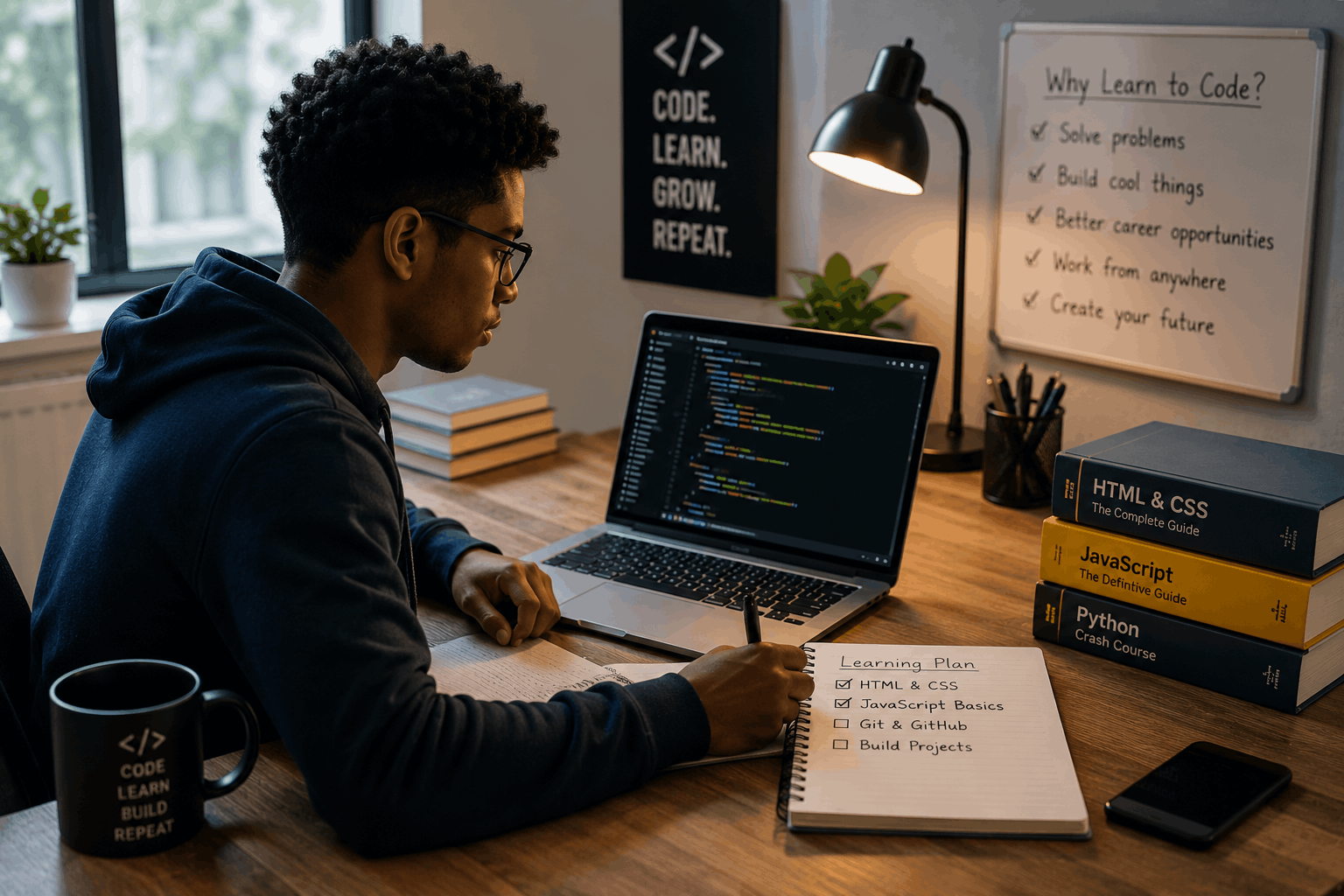
Coding is not the new skill reserved for software developers anymore. Now, it’s handy in a variety of professions, from web development and data analysis to cybersecurity, artificial intelligence, digital marketing — even business. Using programming to:
- Create your own websites or apps.
- Get remote and freelance qualifications.
- Have great problem-solving skills.
- Learn the process of contemporary technology.
- Make portfolio-boosting projects.
The best part? You don’t need to have to pay to get started.
1. freeCodeCamp
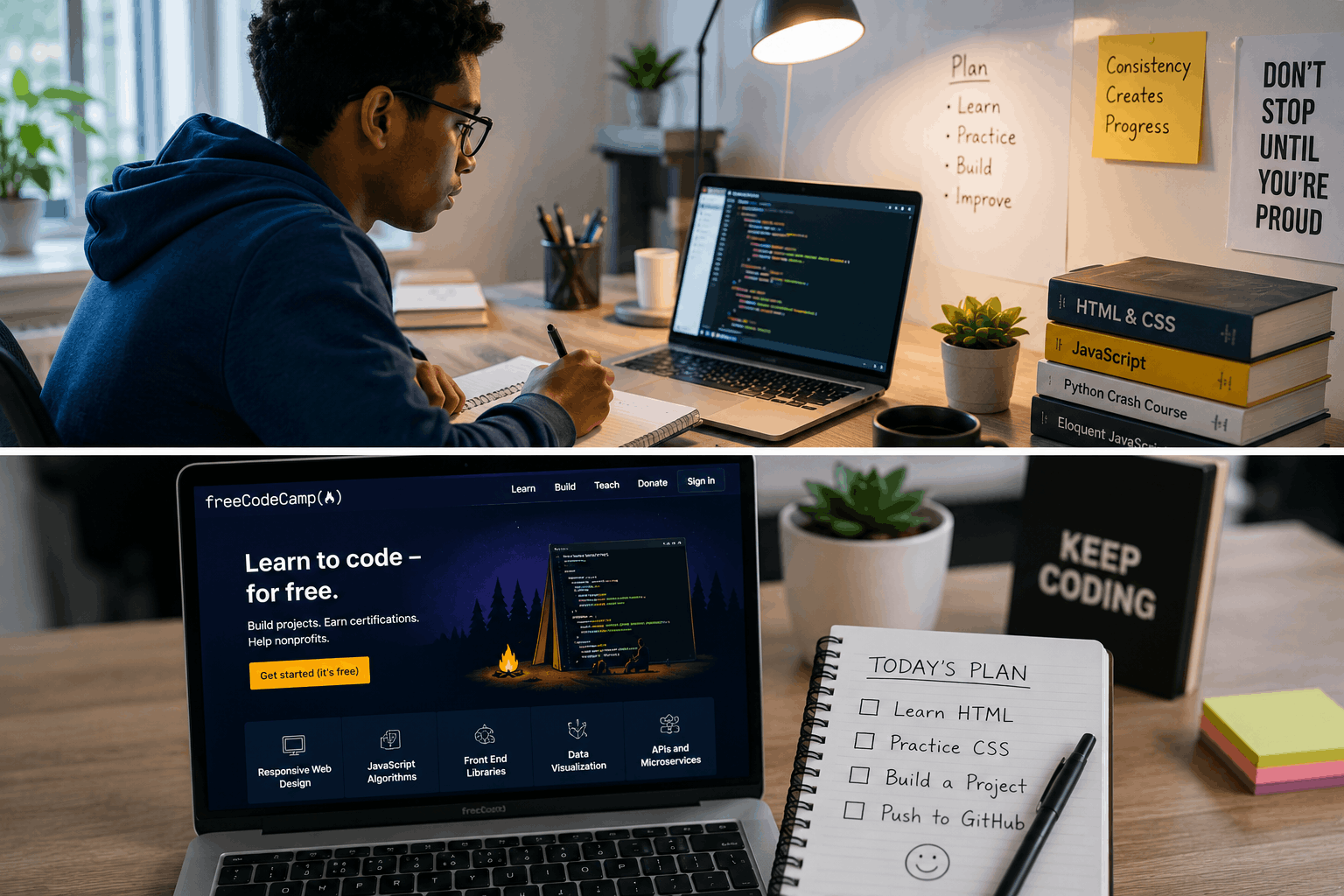
If there is one website that crops up in conversations between novice programmers, it is freeCodeCamp. It was different in that it was practical in the sense that it offered practical applications. Instead of learning from books in theories, you may put together real projects as you go along. By the time you finish a path you have your work that you can actually add into your portfolio. You will learn topics such as:
- HTML.
- CSS.
- JavaScript.
- Python.
- Responsive Web Design.
- APIs.
- Data Analysis.
It is entirely free and still one of the best places for beginners to begin.
2. Codecademy
Others learn better by doing than by seeing videos. Codecademy is worth attempting for you. You’ll be able to write code directly from your browser and learn each step to write code directly on Codecademy’s website via the site, which will take you through every lesson step by step. The site allows you to write code in your browser, on the spot when you’ll take classes and guide you through your lessons step by step. Immediate feedback enables you to make mistakes of any kind instantly. Its free lessons include popular languages like HTML, CSS, JavaScript, Python and SQL.
3. W3Schools
Every web developer has seen W3Schools at some point at least once. Its strength is not grand design — it is minimalist simplicity. Tutorials are straightforward and every topic has an online editor on every topic where you can test code as you get your hands dirty. Even expert developers will still consult W3Schools when they need to look for syntax or to cover a concept.
4. Khan Academy
If you follow the clear-explanations way like Khan Academy to learn along with few short video lessons. The lessons are created for beginners (you understand your way around programming) so it doesn’t feel daunting. You’ll find courses covering:
- JavaScript.
- HTML.
- CSS.
- Computer Science fundamentals.
It works especially well from the perspective of kids who enjoy a clear outline.
5. Coursera
Coursera takes advantage of the great universities and technology companies around the world—the company not only promotes high quality and high-quality online courses by engaging with the best universities and technology companies. Most programming courses may be free to audit and so if you find your way to the right software or web course content, you can do it online and even learn any way without the cost of a certificate. Great if you want, however, because it becomes much more academically sound.
6. Harvard CS50
Don’t be afraid of the Harvard name. CS50 is tough, but it’s also one of the most prestigious introductory computer science courses around. Instead of a single programming language, it lets you see how computers solve problems. That foundation can be incredibly helpful when you’re learning. If you’re into programwriting, then this course is worth the effort.
7. The Odin Project
If it’s your dream to work as a web developer, “The Odin Project” should form one of your list. And rather than being isolated lessons, it takes you on complete projects that are representative of real development work. You’ll learn:
- HTML.
- CSS.
- JavaScript.
- Git.
- GitHub.
- React.
- Node.js.
Everything is available for free.
8. SoloLearn
Some people don’t have hours to sit behind a computer every day. SoloLearn allows one to learn programming through abbreviated sessions, using your phone or laptop. The bite-sized lessons are ideal if you’re studying on breaks, commuting or juggling school with things that you’re doing.
9. GeeksforGeeks
Once you’ve acquired those basics, you’ll eventually enjoy the exercise of solving real programming problems. And this is where GeeksforGeeks comes in. The platform offers thousands of tutorials, coding challenges, interview questions and explanations from beginner to expert to algorithmic expert content. It’s a site that you likely won’t leave long after you’ve mastered the basics.
10. MDN Web Docs
If your desire is a web dev, MDN Web Docs needs to be your go-to source for tools that are reliable. Mozilla maintains it for HTML, CSS, JavaScript, web, technical sites. Multidisciplinary team members depend on MDN a lot as it is more precise, is well maintained, and keeps the status current over a period of time.
What Website You Need to Start With?
And if you can’t remember the name of a place to begin with, what Website You Need to Start With? You don’t have to sign up for all ten sites at once. If you are starting from scratch, begin with freeCodeCamp or Codecademy. They are organised so that you grow in terms of confidence without feeling defeated. When you’re comfortable, however, you can reference W3Schools and MDN Web Docs — while exploring, on the more advanced programs, Harvard CS50 or The Odin Project. When it comes to all platforms, consistency is worth more than picking the “right” platform, do know this.
Tips for Quick Learning
A lot of novices quit because they assume quick returns. Coding doesn’t work that way. Here are a handful of habits that actually matter:
- Instead of studying once a week, practice a little every day.
- Develop some tiny projects after each topic covers.
- Don’t copy code unless you know it.
- Make mistakes, and come to understand that mistakes are part of the learning process.
- Have coding communities where you can ask questions and learn from your peers.
The better programming feels naturally the more practice you do.
Final Thoughts
Each software developer was born a beginner. It wasn’t that they discovered a secret course or a killer website — it was that they just kept showing up, practising and repeating their mistakes. All of the sites in this guide are great things to be aware of when you start, because if you don’t start consistently and with curiosity, it will remain a struggle for you to take on anything. Pick one platform and go to it for a few weeks, then build small projects, rather than rush through lessons. Soon enough, you’ll have skills that will lead to freelance positions, internships and a career in technology.
Frequently Asked Questions
Can I actually learn coding with no pay? Yes. Some of the best programs on the planet — like freeCodeCamp, The Odin Project and W3Schools — are entirely free.
Which programming language is best for beginners? Python is generally recommended, because it can be read with ease.
How long does it take to get qualified to work? It depends on how hard you try to learn. By being repetitive and working projects over time, many become masters of the trade in a matter of six to 12 months.
Do I require a computer science degree? No. Many of the successful developers are self-taught. Employers tend to favor practical skills, projects and problem-solving ability in addition to formal education.

