

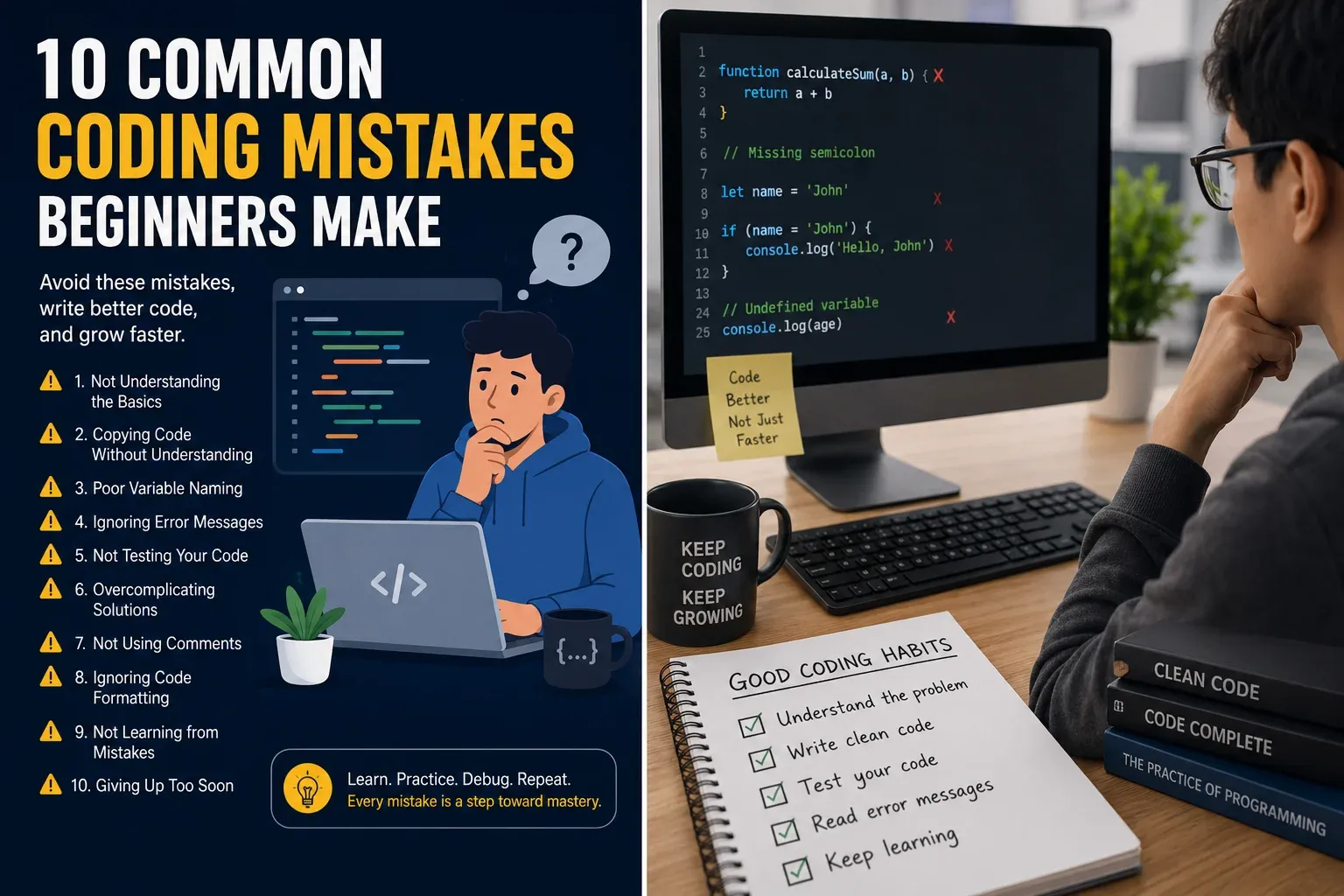
Programming is rejuvenating. You write your first coding , solve your first problem and suddenly you feel like you’re on your way to becoming a developer then reality sets in. Your code doesn’t work. Error messages come in for reasons you don’t know. The ideas you found within a tutorial become confusing once you attempt them on your own.
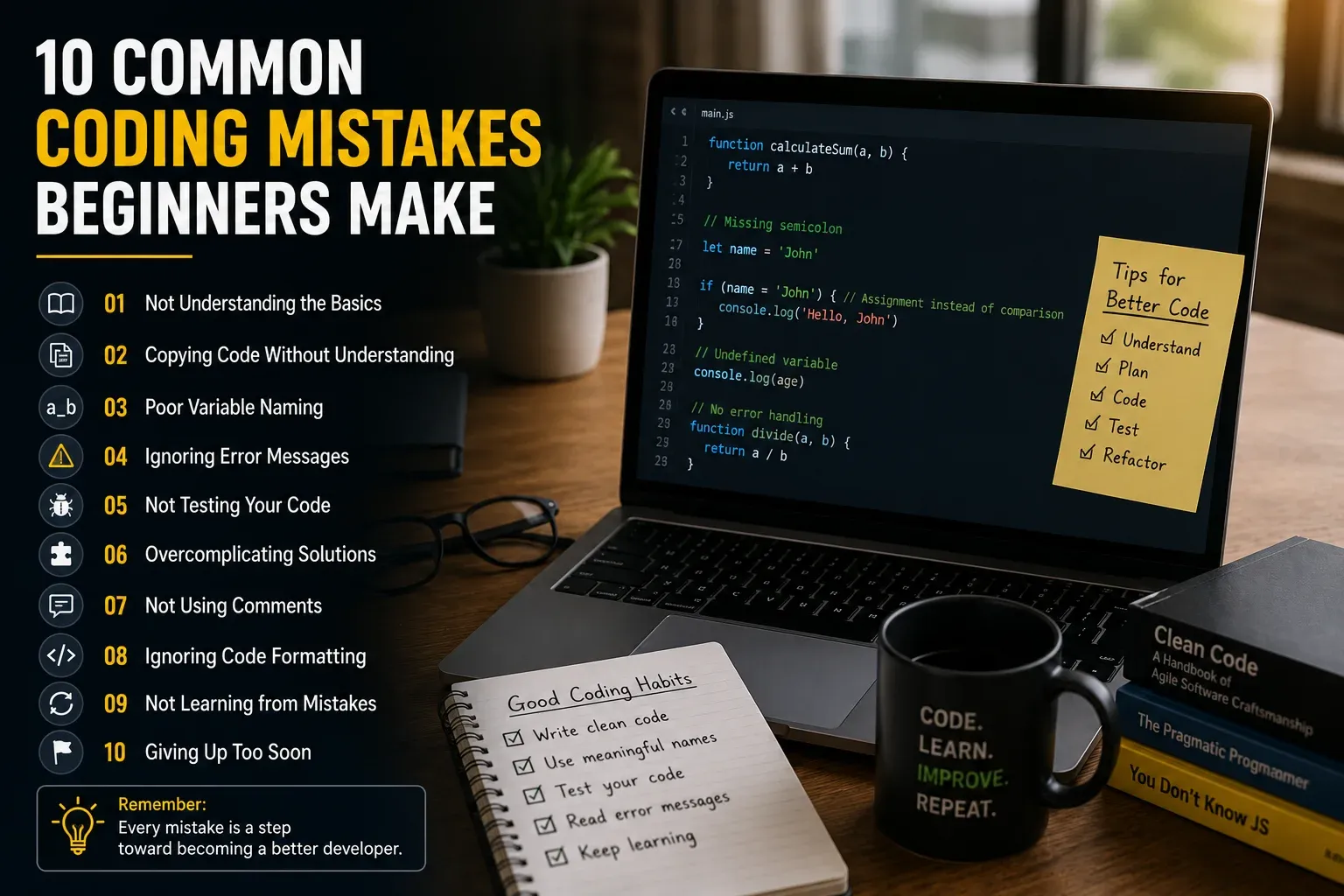
If you’ve been through it, then you aren’t the only one. Every programmer — starting with the less experienced and all the way up to professional programmers — has made errors while they’re learning. Instead of letting them stop them, however, seasoned developers learn from those mistakes—the difference is not the opposite. Here are ten mistakes that inexperienced programmers usually make, and how can they be avoided.
1. Trying to Learn Too Many Programming Languages at Once
Many feel tempted to learn Python, JavaScript, Java, C++ and Swift all at once. After all, each language feels like something of use. The trouble has been that switching from language to language constantly has made confidence in any one of these much harder. However, instead of making sustained improvements, beginners often feel overwhelmed.
What to do instead. Pick one of the beginner languages — say, Python — and try and stick with it until you’re used to a basics level. Good learning of one language makes it way easier, in the future, to learn other languages.
2. Only Watching Tutorials Without Writing Code
Consequently, one of the largest reasons beginners feel stuck. So watching tutorials is productive because you are learning new principles. But programming is a technical skill. If you don’t make written code yourself, you’ll forget a lot of what you just watched.
What to do instead. Build something basic after each lesson:
- A calculator.
- A quiz game.
- A to-do list.
A tiny project teaches you more than mere hours of passive watching.
NovaBaze Insight 💡 Tutorials should help you learn — not substitute for you. Real progress occurs when your fingers are on a keyboard versus your eyes on a screen.
3. Fear of Error Messages
Most newcomers see red text and they quickly think they have failed. Novice developers look at code in red all sorts of people see a different picture. They see information. Error messages usually inform you directly where the issue is. The most important programming skill that can be gained is learning to read them closely. Rather than being afraid of mistakes, act as hints.
4. Copying Code Without Knowing It
This approach does, however, give you feedback about the work. Copying code used in the site or an AI tool might temporarily alleviate the problem. But a lack of knowledge of what the code does makes it difficult to tackle similar problems in the future. Ask yourself:
“Can I explain this code in my own words?” If the answer is no, take your time to figure it out before moving on.
5. Ignoring the Fundamentals
They also often jump ahead into web frameworks, artificial intelligence or app-building without the chance to learn the fundamentals early on. They would like to construct exciting projects as soon as possible. There’s nothing wrong with ambition, but not knowing anything about your bases to build up to results makes things hard later. It’s just that they’re getting a kick out of having a good plan when you have much more to learn.
Variables, loops, functions, conditions and data structures might seem simple but they are the building blocks of most programming languages. It is much more straightforward for advanced topics where strong foundations are at hand.
6. Comparing to Other Developers
What’s been an impressive project on social media? You can see someone developing a mobile app after just six months of learning. What you don’t see are the hours of practice, mistakes and revisions you took on that project.
Each of us goes at a different pace of learning. Rate the way you are improving against the past self — not someone else’s highlight reel.
7. Giving Up Too Quickly
Programming can be frustrating. Some bugs come in in minutes. Others take hours. One day you fix one bug, and then you discover another yet! That’s completely normal. The developers who upgrade aren’t always cleverer. Persistence is one of the most important skills you can learn.
8. Not Using Git or GitHub Early
Some nonexperts believe Git and GitHub are only for mature developers. In truth, they’ve made things better for you from the start. They help you:
- Store different versions of your work.
- Track changes.
- Build a coding portfolio.
- Collaborate with others.
Early learning of these tools makes these projects and projects much easier with it up to date a lot later.
9. Never Reading Documentation
The prospect of documentation can feel intimidating. Most beginners shun it altogether. But the best explanations in official documentation are usually the ones with the best examples. And learning to read documentation teaches you how to become independently programmed. You don’t need to read every page. Find out the functions or concepts you’re learning right now looking to learn.
10. Expecting to Be an Expert Too Much Too Quickly
Most people never master programming in a few weeks. It takes time. There are ideas that just leap out. Others may need a few more tries before they seem coherent. That’s part of learning, it’s as simple as that. Celebrate small wins. All that good work and work that was done to stop a bug and new idea pushes you.
What Most Beginners Get Wrong
Many people think good programmers do not make mistakes. The reality is the complete opposite. Experienced developers make mistakes every day. The difference is that they figure mistakes are normal in that process. They do not become frustrated so much as look into solving the problem, try something new, and go on to build anything.
Programming isn’t just about trying to prevent errors. It’s about learning to be better at solving them.
Your Coding Progress Checklist
- ✔ Have you created five or more projects of your own?
- ✔ Do I understand the code I write?
- ✔ Do I practice or just watch tutorials?
- ✔ Can I read and learn from error messages?
- ✔ Have I begun working on my work by organizing it through GitHub?
If you answered “yes” to many of these questions, then you’re developing good programming habits.

