

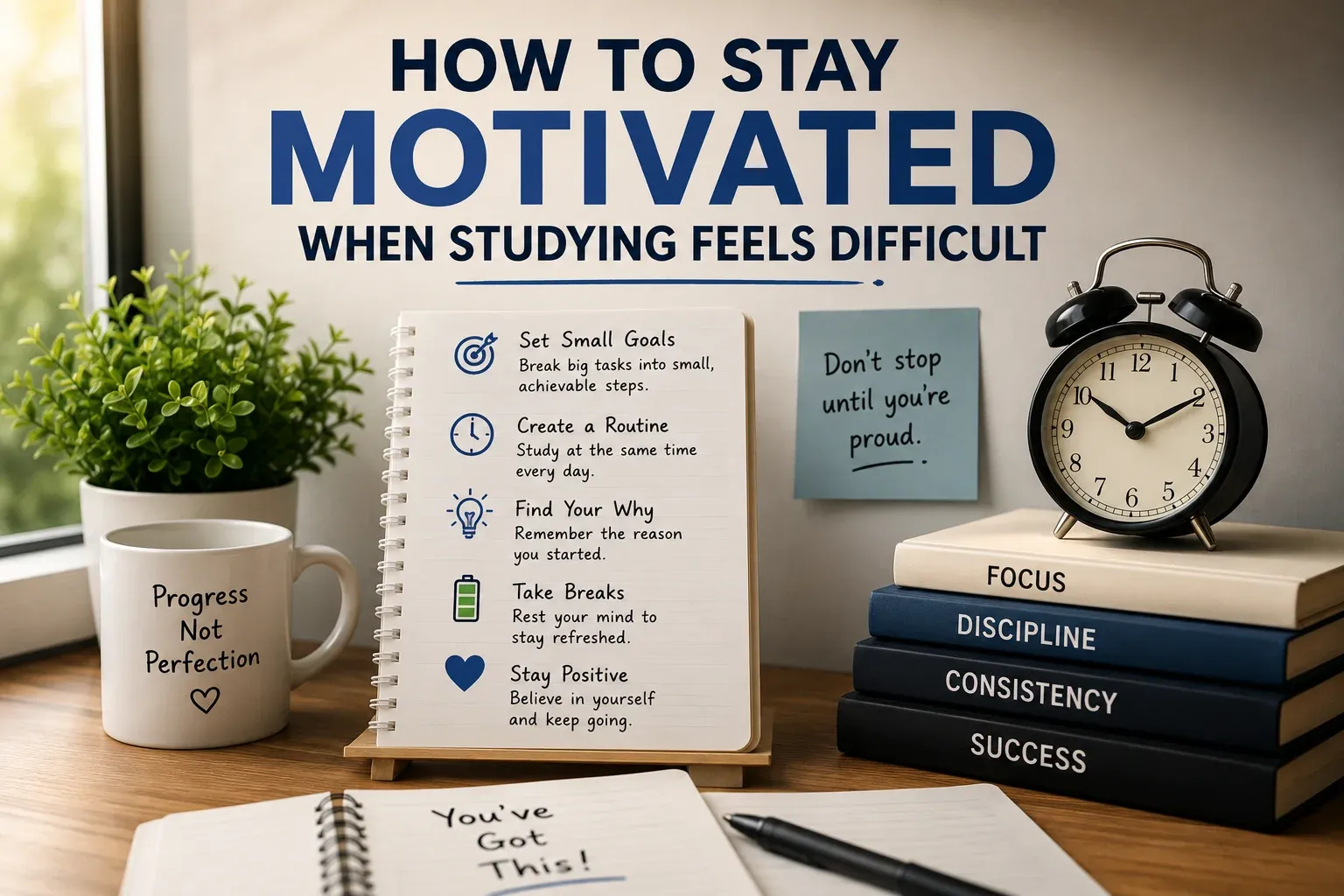
It’s one that almost every student suffers from at some point. You sit and study, you put your books or laptop open, and seconds are suddenly your mind is no longer in your head. All at once everything else is more interesting than what the assignment is before you.
You are not a lazy individual; and sure, you are not alone in finding this. To the contrary, motivation isn’t something you have all the time. Even the top students have days they don’t want to study. The difference is they don’t depend on motivation alone. They create habits that encourage them to keep moving even when they’re not inspired.
If studying has begun to feel daunting, some methods are provided to calm your nerves up (and get back on track) and work on making it happen with these practical strategies.
1. Do Not Wait to Feel Inspired
You’re convinced that studying takes the spirit of motivation to take off. In reality, most motivation is after the fact. Remember the last time you didn’t want to study and forced yourself to just work for ten minutes? I suspect there’s a good chance it got easier to keep on doing it once you started. Just like waiting for the “ideal mood” will result in nonstop procrastination.
What to do instead. Make a mental promise to yourself that you will study for 15 minutes. After you get started, it will be a lot easier for you to keep on with it as long as you do!
NovaBaze Insight 💡 Actions motivate more than motivation drives actions. Don’t wait for you to feel ready — start and let the momentum take hold naturally.
2. Break Big Tasks Down into Smaller Steps
When a whole textbook or an extended assignment looks in front of you, suddenly it will bring on the sense that one’s very skin is all wet from battle. Your brain perceives a large task clearly, and naturally wants to avoid it. Instead of thinking: “I need to study Biology.” Think:
- Read one chapter.
- Answer five questions.
- Review today’s class notes.
- Summarize one topic.
So when you have small goals and these feel attainable, it is easier to get focused.
3. Remember Your Purpose with College
When there are still weeks standing to go for exams it can be easy to lose sight of your purpose. Remind yourself why you are working this hard. Maybe you want to:
- Graduate with good grades.
- Qualify for a scholarship.
- Build a successful career.
- Make your family feel proud.
- Reach personal goals.
Your reason doesn’t need to be perfect; just mean something to you.
4. Create a Study Routine
Most students will study only whenever they “feel like it”. Unfortunately, those moments are not always there. Regular study schedules do not force you to make the same decision every single day. For example: Monday to Friday 7:00 PM – 8:30 PM.
Studying is more a habit rather than a daily fight when you start studying.
5. Take Breaks Without Guilt
Hours of studying without breaks just doesn’t always mean better learning. Actually it takes away from your focus when you lose focus you see. Brief breaks can help to rest your brain.
- Stand up.
- Stretch.
- Drink water.
- Take a short walk.
Return to work, with a more clear mind. Rest is part of meaningful studying, not the antithesis of it.
6. Stop Comparing Yourself to Other Students
The last and most important thing is for these students is to stop comparing themselves to other pupils from thinking everyone else can speak more deeply or better than you can. But remember: You only see what the performance looks like — not the work behind it. Some students spend hours revising but feel empowered. Others are in a deep-dive questioning mode at the outset of a topic.
Emphasize your own progress. Learning isn’t a competition.
7. Study With a Purpose
Instead of just reading pages with blank thoughts, engage in a critical question. For example:
- Can I tell other people about this?
- What are the main ideas?
- What might appear in an exam?
Active learning engages the mind better and allows you to remember information longer.
8. Remove Small Distractions
Sometimes the obstacle is not the subject itself. It’s the constant interruptions. Notifications. Social media. Television. Background noise. Even checking your phone “for a minute” can quickly turn into twenty minutes.
Set up a study environment that makes concentration easier. Often a quiet environment makes a noticeable difference.
9. Celebrate Small Wins
You don’t have to wait for the test results to feel accomplished. Celebrate small victories on the way. Maybe today you:
- Finished a complex chapter.
- Solved a problem you did not understand yesterday.
- Completed your weekly study plan.
And acknowledging progress will help you to keep motivation up in the long run.
10. Accept That Some Days Will Be Hard
The study sessions aren’t all going to be fruitful. Some days you’ll learn everything. Then on some days you will not understand easy concepts. That’s absolutely normal.
Progress doesn’t consist of having perfect days. Progress is the ongoing endeavour when learning starts to feel scary. Every hour of practice helps on your path to success.
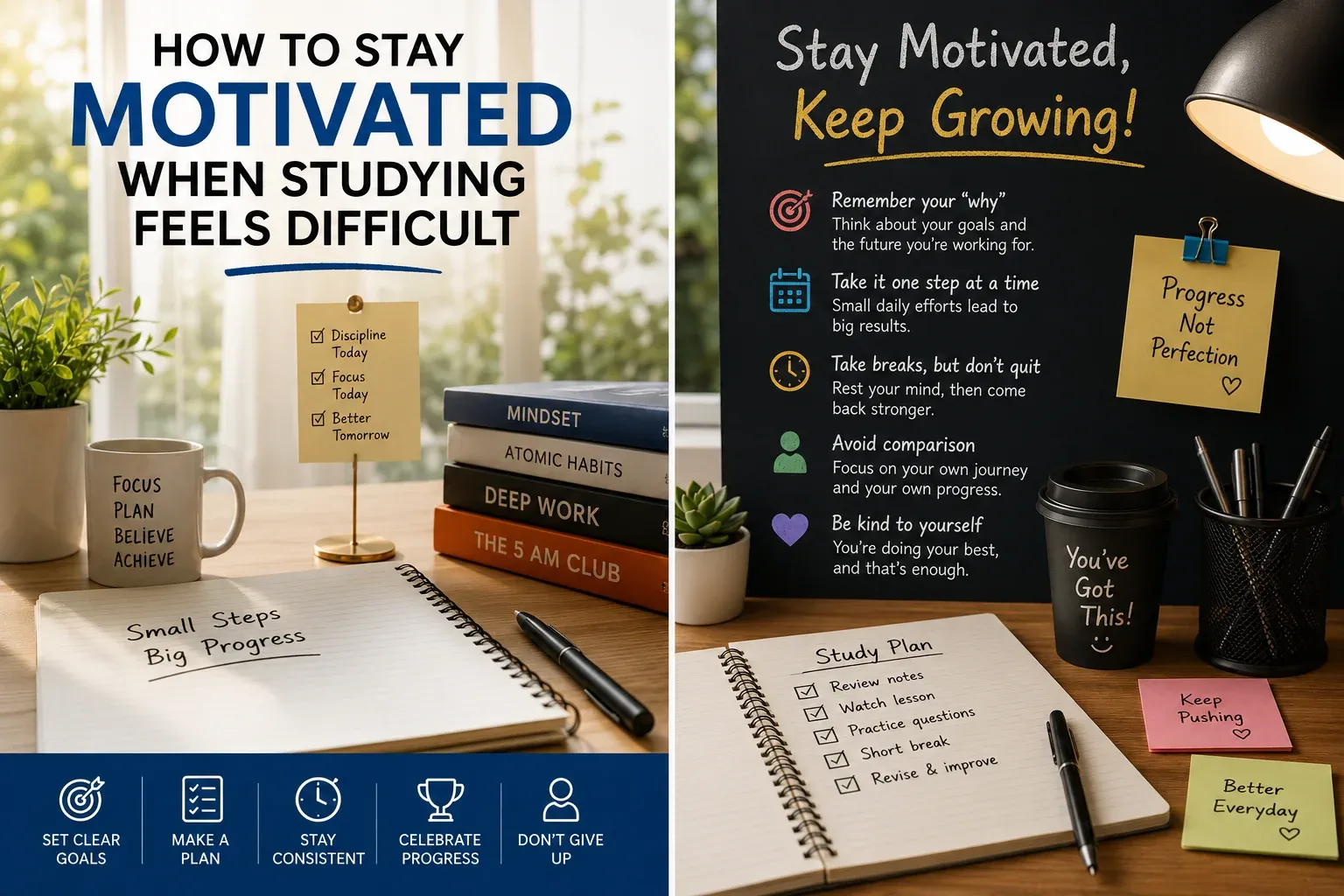
What Most Students Get Wrong
Many students assume successful people will always be motivated. They aren’t. Good students study because they have established good habits — not because they wake up inspired every morning. Discipline can often persist far longer than you might imagine. The earlier that’s clear, the more practical studying is.
Your Motivation Checklist
When it’s hard for you to study, say to yourself:
- ✔ Have I even begun, even for only 15 minutes?
- ✔ Am I focusing on one small task instead of everything at once?
- ✔ Have I removed unnecessary distractions?
- ✔ Do I remember why I was working toward this goal?
- ✔ Have I taken a short break if I’m feeling mentally tired?
If most of these questions passed you a “yes,” you are already headed in the right direction.
Final Thoughts
Each student has times when studying feels difficult. That’s part of learning. You don’t need to be motivated every single day. The objective is to continue and keep on going when motivation is low.
Start with one page. One question. One lesson. The bigger the results are, the more often small steps are repeatedly followed.
Your future success will not be measured by one perfect study session. It will be sculpted by the habits you establish in time. Keep going. You have been making more progress than you know.
Why Employers Care More About Skills Than Degrees (And How to Stand Out)

