

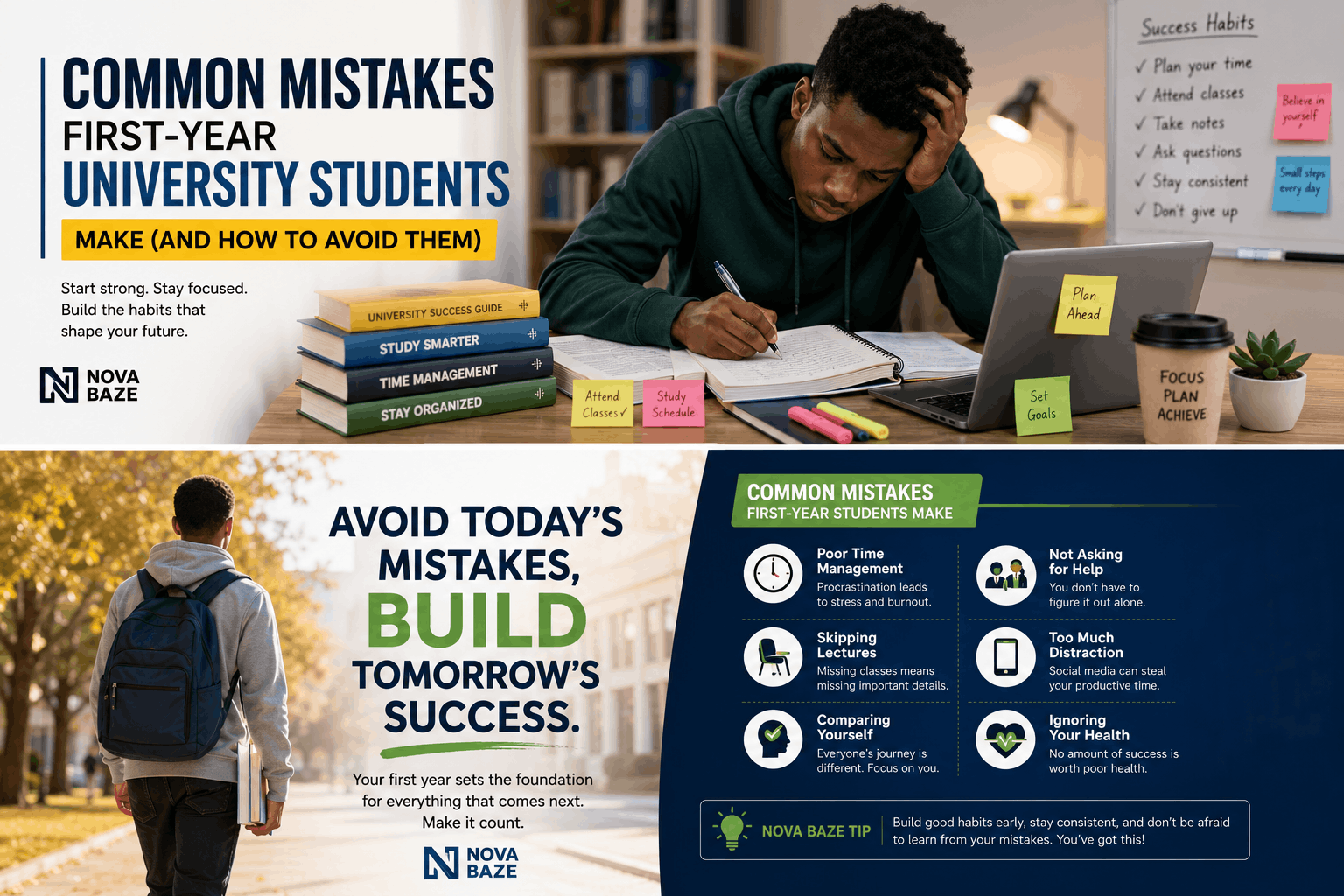
The first weeks of university are an exciting spring. In the beginning everything is a whole new feeling. It’s a time when you meet people from different backgrounds, attend your first lecture, wander campus and find a degree of independence you’d probably never experience before. It’s also when many students blunder they don’t even know they’re blundering.
The only interesting element is these mistakes do not occur because one is too stupid for university. More often than not, they occur because university is something very different from high school, and no one has explained those differences to anyone before classes start.
Just as often, though, they occur because nobody explains them before the classes start. At the same time, if you’re about to begin your first semester—or start a new year—though, this guide to the course can also help avoid some of the most frequent mistakes your freshman and veteran students will be struck by a first new student’s big mistake that can catch you off guard.
1. Believing University Works Like High School
One of the largest surprises for new students is the massive amount of responsibility that suddenly falls on them. In high school, teachers often prompt students about homework, upcoming tests or unfinished assignments. University lecturers usually expect you to keep track of those things yourself. Nobody is going to follow you around because you missed a deadline.
This freedom can at the time be exhilarating, but it’s also tough.
What to do instead
Purchase a planner, or use a calendar app. When an assignment, quiz or exam is announced, write it down immediately. It only takes a few seconds but can rescue you from more unwanted stress later on.
NovaBaze Tip 💡
Don’t trust your memory. Almost every student has said, “I’ll remember that deadline.” A lot of them realize later that they didn’t.
2. You Wait Until the Last Minute to Study!
University can be surprisingly low-key during the first month. You may have a few lectures a week, deadlines are never close. That’s why many students wind up delaying their work. Then suddenly, several assignments, giving presentations, exams all come up in the same week. Rather than enjoying university, they’re trying the catchup game.
What to do instead
Spend a while after each lecture reviewing your notes. Even taking the time to review your notes 20-30 minutes while the classroom is still fresh can make revising a lot easier as exams come up.
3. Believing Attendance Doesn’t Matter
Lectures are also not being attended because the slides are uploaded online. The idea is to avoid the idea that students show up for these lectures—at least while they are getting a lecture—which is not the best approach for all students. Lecture slides can be quite helpful but seldom contain all that your lecturer describes. A lot of examples, discussions, practical demonstrations and test hints are shared during class—not on the slides.
Not missing a single lecture seems minor, but missing a bunch can result in an inability to master new subjects.
4. Seeking to Do Everything Alone
First-year students often avoid asking questions because they fear being inexperienced. Here’s the truth:
Just about everybody else is confused, too. Those students who ask questions, attend tutorials and ask for help early tend to catch up much more quickly than those who shut up. University is a place to learn a bit, not a place to pretend you know it all.
5. Ignoring Time Management
The most significant difference between school and university time management is what you do with it. You might only spend a couple of hours every day in class but that doesn’t mean that the rest of your day is free. Learning—reading, assignments, research and revision, group work—all occur outside the classroom. Without a schedule, it is actually all too easy to lose track of time.
What to do instead
At the start of each week, write your priorities down. Knowing what needs your attention protects against unnecessary panic down the line.
6. Spending More Time Socializing Than Studying
One of the best things about university is making friends. Those friendships will help you in the classes and also the emotions and even work if you go back on campus. The difficulty will be finding that sweet spot. It’s fine to enjoy life on campus, but don’t let each night throw you off schedule for even an extra semester of school. Your future self will thank you for finding that balance early.
7. Self-Scrutiny and Comparing Yourself to Everyone Else
University introduces talents. In fact, some people immediately understand every lecture. Some already have years of experience. It’s easy to begin asking yourself if you’re good enough. They show strength instead of the pain behind it.
All learning takes place at a different rate. Let yourself grow rather than constantly measuring yourself against others.
8. Neglecting Your Health
A lot of students have to give up sleep just to complete their assignments. Some will survive off fast food and energy drinks during exams. It may work for a few days, but it’s not going to last. When you look after yourself well, your focus, memory, and energy take turns. Getting enough sleep, hydrating and taking little breaks do not mark you out as being lazy—they’re all very natural for effective study.
9. Waiting Too Long to Develop These Skills
One common misconception is that career preparation begins in your last year. In reality, it begins much sooner. The top students who stand out after graduation often start growing skills from college. That might include:
- Learning Microsoft Excel.
- Improving communication skills.
- Creating a LinkedIn profile.
- Taking free online courses.
- Building a small portfolio.
These small steps gain significant momentum when prospects for internships arise.
10. Your First Semester Is Your Life Stage
Maybe the biggest error is thinking that if you did a bad quiz, failed in one assignment or one class, or one semester was hard it meant you’ve failed. University is a journey. Nearly every teacher said that semester I should say to me now. Most students have experienced a semester they would have liked better if they had not. It’s not just about avoiding every mistake. It is about learning from them and getting better.

What the Majority of First-Year Students Get Wrong
Many new students expect success at university to be predominantly predicated on intelligence. It doesn’t. Students who consistently succeed in some way tend to have something else in common:
- They stay organized.
- They ask for help when needed.
- They manage their time well.
- Instead of quitting, they learn from failures.
Those habits are worth much more than trying to seem perfect.
A First First Semester Checklist
Ask yourself ahead of time whether there are enough hours to complete your academic papers in a semester.
- ✔ Am I able to show up to most of the lectures I am going to?
- ✔ Have I just made a couple friends who have given me a sympathetic ear?
- ✔ Am I going back and reviewing my notes?
- ✔ Have I begun learning any skills that have career ties?
If you could answer “yes” to most of these questions, you’re already building a strong base.
Don’t do something big, take it one semester at a time, stay curious and don’t hesitate to ask for help when you need it.

