
If you are learning Python, however, you have taken an important first step on your course of education. Python became an internationally renowned programming language—and there’s a reason for that. It’s how you design websites, automate mundane tasks, analyze data, build artificial intelligence and even drive parts of the software you use on a daily basis.
But there’s one thing a lot of beginners forget — too late. Most people don’t quit because Python is hard. They abandon the program because they expect the process to behave differently than reality. So before reading your first tutorial or installing your first code editor, here are seven hacks that will save you time, relieve your frustration and eliminate needless self-doubt.
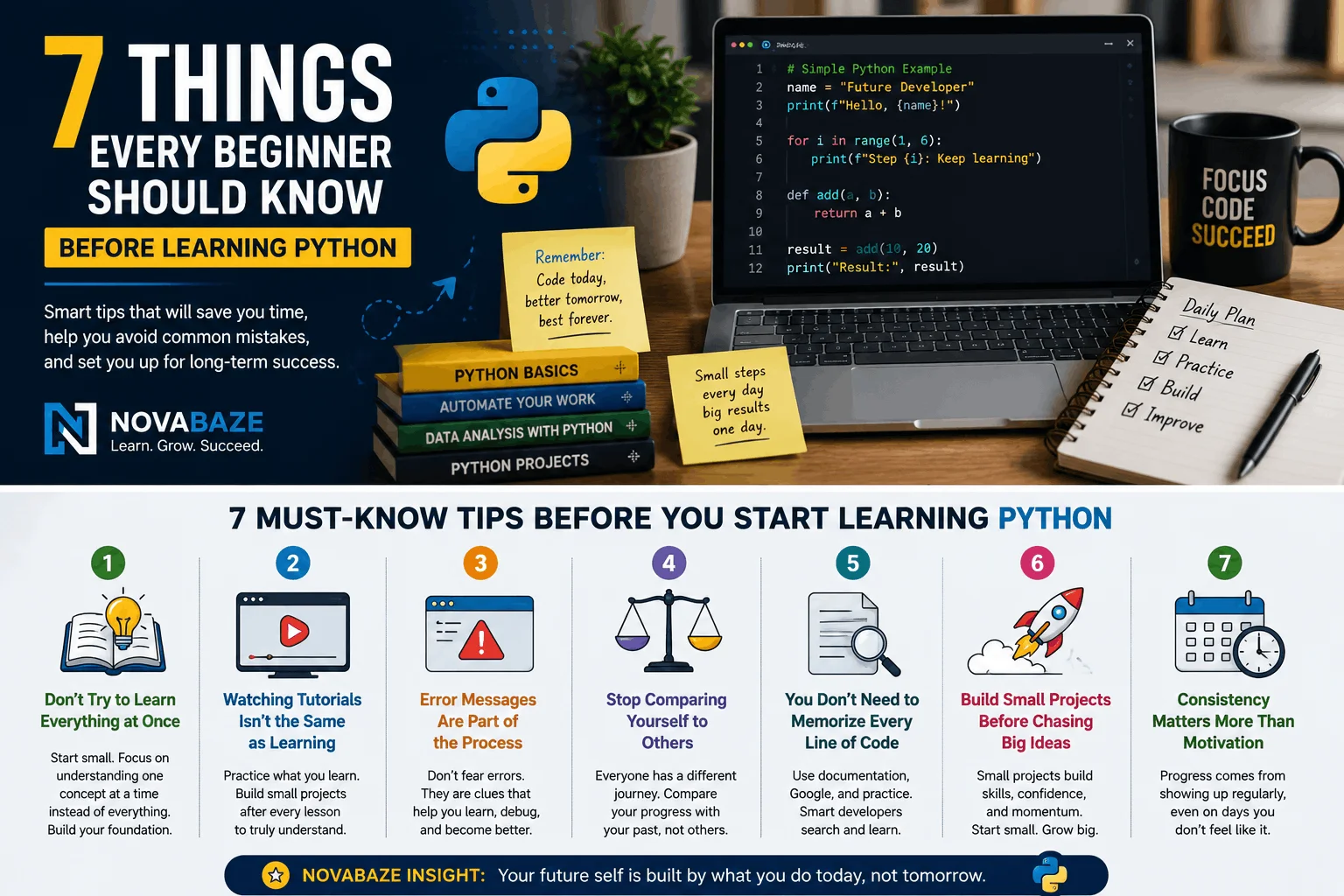
Don’t Humble Yourself When You Learn Everything All in One Go
In the first week, the challenge is getting the hang of all Python in parallel, one of the most immediately overwhelming. Variables lead to loops. Loops lead to functions. Functions lead to classes. Then suddenly, suddenly, you’re reading about APIs, databases, ML and machine learning. It can look like everyone else knows what those things are doing, but you?
The fact is every programmer begins at exactly where you’re right now — learning one idea at a time. Instead of asking, “How long for me to learn Python?”, you ask yourself, “What do I know today, that I didn’t know yesterday?” I learned that progress, small things, grow at a pace much too fast to be realized by most people.
Here’s Another Error Most Novices Make
You have watched a 40 minute video tutorial, followed every step successfully and everything goes well. And also the students can easily compare themselves with what you’ve observed. All of a sudden, everything is simple — it seems productive. The day after you try to create anything by yourself—and lo and behold, you have no way of doing that. That’s because observing someone else solve a problem does not in itself signify finding a solution.
After each lesson conclude the video, and create something easy. It doesn’t have to be impressive.
- A calculator.
- A number guessing game.
- A simple expense tracker.
Those little projects have lessons that hours of passive watching never will.
NovaBaze Tip 💡 If you watch two hours of tutorials, then spend at least an hour writing your own code. Programming is an act of doing. The keyboard is just as much learning as the screen.
Error Messages Are Part of It
Initially looking at a page littered with red text can turn you into someone who feels like they have ruined all of it. Most beginners panic. Experienced developers typically accomplish much simpler tasks, however: They read the error. They search for it. They test a solution. Then they continue working.
Error messages aren’t proof that you’re screwing up. They’re feedback. Revising the mistakes you were not going to make taught you some of the most valuable lessons.
Quit Taking Yourself Too Close to the Bottom of the Line
Programming communities boast about many awesome projects. You can find newcomers, just starting to open websites, get their mobile apps, start playing games and creating AI tools. That’s hopeful, but it is exhausting to overlook something so vital. You’re not seeing their weeks or months of getting stuck, rewriting code and fixing bugs.
Look beyond the limitations. Rather, you need to strive for a higher performance than the last month’s version of you — not better than one who has written code for three years.
You Mustn’t Remember Every Line of Code
Some beginner folks believe that good programmers have great memories. They picture experienced developers writing complex programs but never checking out documentation. This is not how programming works. They learn a lot about how that information is accessed – review previous works done before, such as previous projects.
The skill is not knowing everything. Problem solving competence. It becomes habitual, and the code you write the most often over time becomes familiar that does become less repetitive. No need to force it.
Start Building Small Projects, Rather Than Chasing Big Ideas
Most everybody starts with an ambitious dream. “I want to develop the next Facebook.” “My aim is to create my own AI, so I’m going to develop it.”
All of these ambitions are exciting but the only way to accomplish them is by getting started. Small projects build confidence. Try building things like:
- A password generator.
- A simple calculator.
- A quiz game.
- A to-do list.
- A weather app.
- A basic expense tracker.
You’ll get a new idea at every finished project. And more importantly, it reminds you of your progress
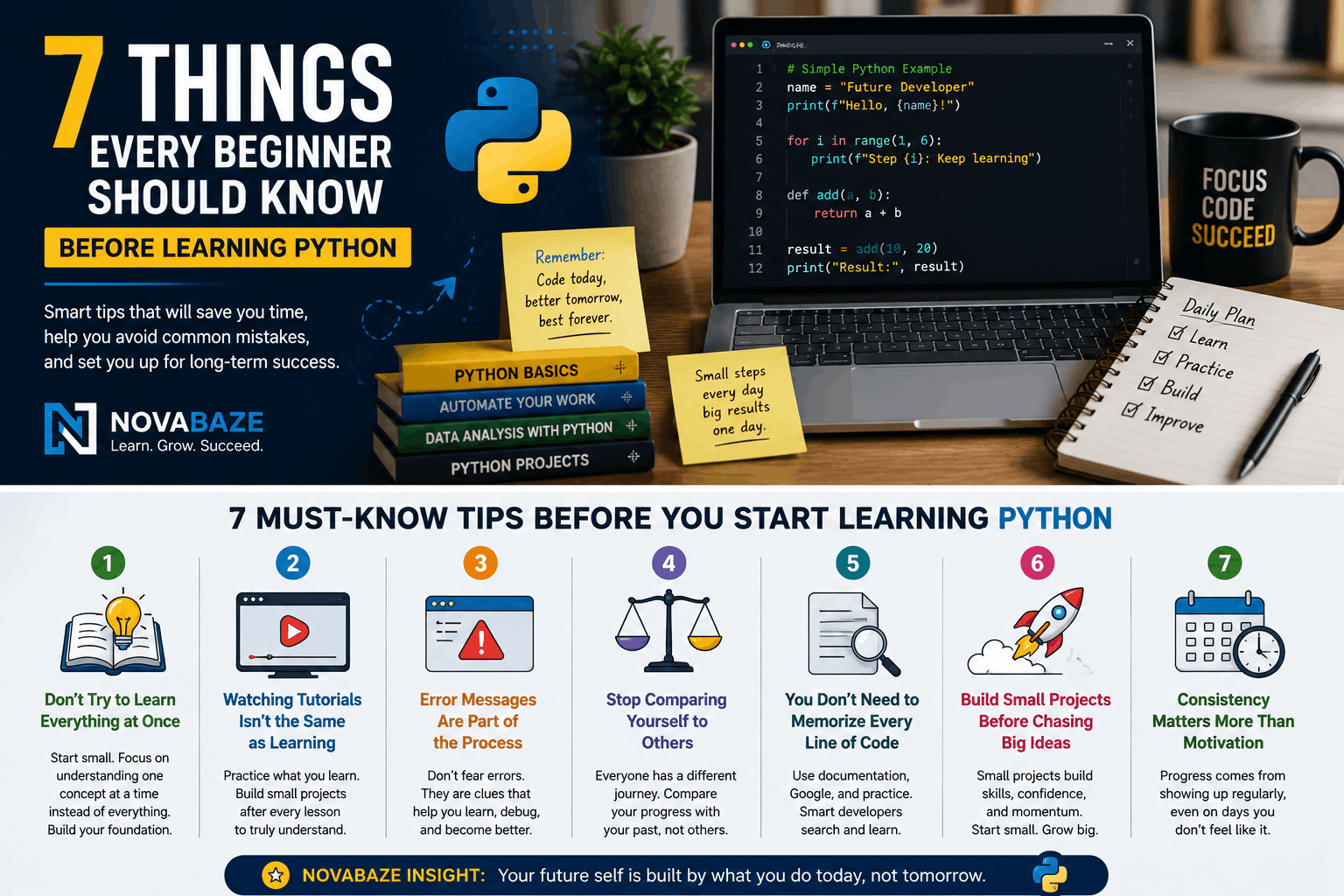
It’s More All About “I-Like-y Than-You”
A few days programming is enjoyable. Some days you’ll watch for an hour, looking for a missed bracket, a typo. Some days coding is an activity not to be missed. That’s normal.
Python is not a daily process of motivation per se. It’s about simply showing up anyway. And even 30 minutes of focused practice a day can be worth more than eight hours a week. In programming, you get rewarded with consistency. Those who improve in the end aren’t always going to be the smartest. They are the one and end number who stay stubborn all around.
What Almost Everyone Newcomers Do Wrong
Many believe the thing to be difficult about learning Python is figuring out the language itself. Actually the real difficulty is getting into the habit of solving problems once and for all. Python will certainly become easier if you get past a single-mindedness to write code well.
There should be no beauty in your first programme. Neither were anyone else’s. The goal isn’t perfection. The goal is progress.
A Beginner’s Checklist Helps You Learn from Scratch
Check these before getting into more sophisticated topics in Python:
- ✔ Can I write simple programs without copying every line?
- ✔ Do variables, loops, and functions work for me?
- ✔ Have I constructed at least three small projects?
- ✔ Am I comfortable reading error messages?
- ✔ Do I practice regularly instead of only watching tutorials?
If most of these questions you answered “yes” to, the foundation has been laid.
Final Thoughts
There is no race for you to learn Python. People who already have tech backgrounds can learn more quickly; others take some extra time to understand the concepts. Both are perfectly logical — natural paths.
Don’t measure what you’ve accomplished by the extent of what you’ve done or the number of tutorials you’ve done. Figure out what problems you might be able to solve today and think there are things in the past that you thought were insurmountable. The real progress takes place there.
You have opened one of your first Python programs, studied how good it all is looking forward to and smiled at yourself. You’ve come a long way. Keep writing code. Keep making mistakes. Keep learning.

