
Getting invited to a job interview is already an achievement. It means that some attention turns to your CV and the employer believes you would be someone they already know is suitable for job roles. But here’s something many candidates don’t know:
Even one intelligent CV can land you an interview. So a great interview gets you a job. Some people however are just going to miss all the opportunities they have, by doing little things they never thought they were doing. Not all of these errors are evident though. Most take place, in reality, long before the interview has even hit the hard questions. The good news is that they can be prevented. If you know what it means employers are paying attention to you will be able to enter your next interview feeling more confident, more prepared.
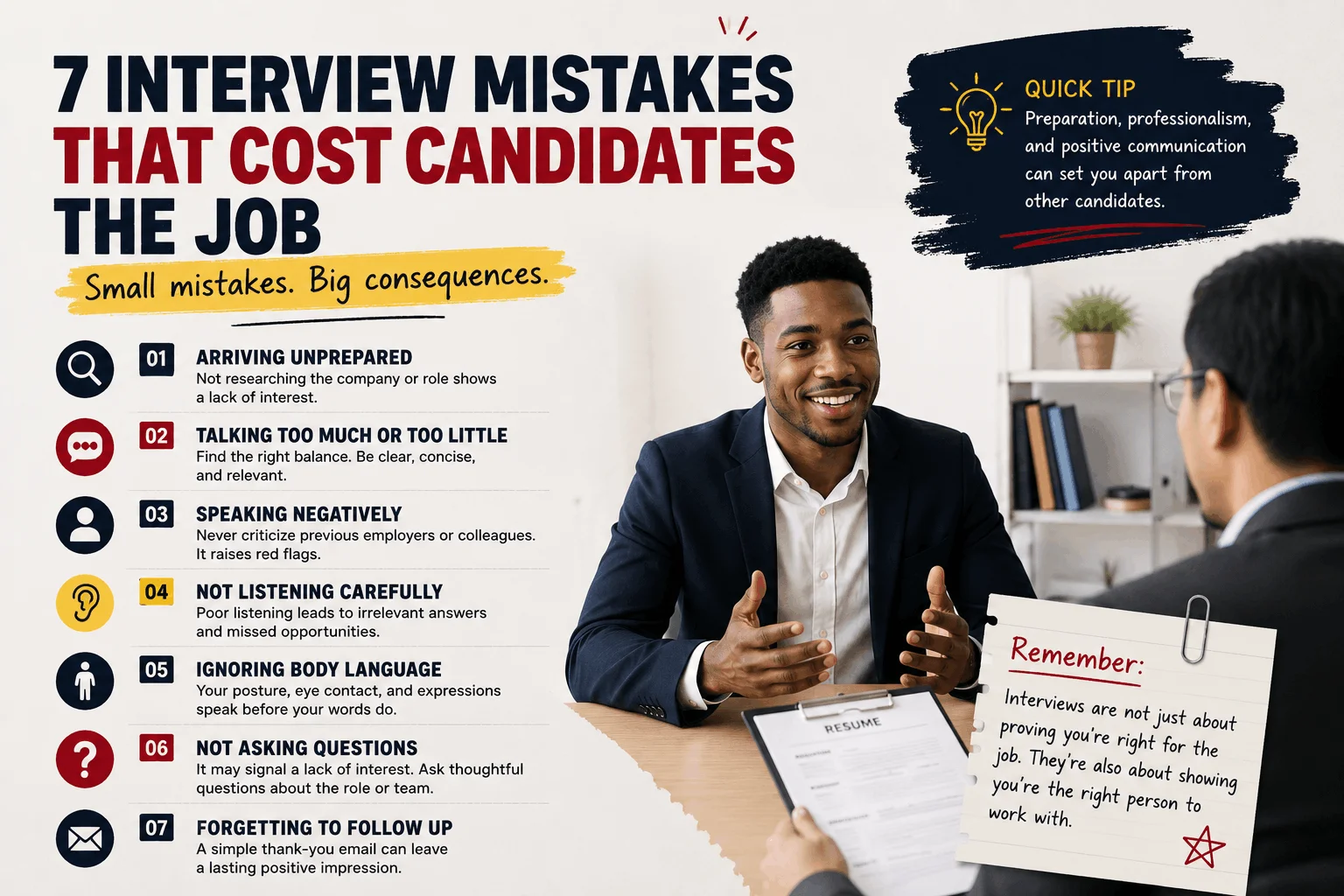
1. Arriving Unprepared
As in this case, most candidates are convinced that since they fit the job description, they are ready for an interview. For one thing, preparing involves much more than reading your CV. Before you even have an interview, learn about the company. Question Yourself:
- What does the firm do?
- What are its products or services?
- What obligations does this require?
- Why do I want to work here?
Interviewers take notice of candidates who invest time in getting to know the company. It shows genuine interest.
NovaBaze Insight 💡 Preparation builds confidence. The more you understand about the company and the job, the more organically you’ll be able to answer questions when it is time for the interview.
2. Talking Too Much — Or Too Little
Some candidates answer each question with a 5-minute story. Others respond with a single-word response, leaving many interviewers scratching their heads. Neither works well. If the interviewer wants to know more, they will get it.
3. Speaking Negatively About Past Employers and Lecturers
In these situations, please refrain from disparaging former employers, bosses or supervisors, teachers, educators and classmates. Interviewers may question this further: “Will they mention us that way someday?”
Instead of getting stuck on complaints, explain what you learned from unhappy experiences and what is unique about that tough situation that helped you to grow. Professionalism wins out over blame.
4. Not Listening Carefully
Many candidates are so overwhelmed with what they have to say next that they don’t even listen to the question. So, they say something completely different. If you cannot understand a question, you can say:
“Can you either explain the question again or expand on it?” A few extra seconds of wait are infinitely better than an irrelevant answer.
5. Forgetting That Body Language Speaks Too
Your words matter. But so is your own body language. Small habits here are best and have a positive effect:
- Make eye contact comfortably.
- Sit in a comfortable sitting position.
- Smile naturally when it makes sense.
- Don’t scroll on the phone or watch constantly.
- Display interest through your expression.
Confidence is not an indicator of the ability to talk — to give the appearance that you know everything. It’s a way of saying that you have engaged yourself and that you’re ready to communicate.
6. Failing to Ask Questions
Towards the end of many interviews, you know this: “Do you have questions for us?” Some candidates just reply, “No.” Although not wrong in disguise, asking good questions often unveils interest and curiosity. For example:
- Where does success lie in this role?
- What are learning and growth possibilities?
- What’s a typical day like?
- In what ways do the team members normally work together with you?
Those questions also guide you on whether you are the right fit for the role. And, remember, you are judging the company as well.
7. Forgetting to Follow Up
Most candidates also have the mentality that the interview ends when they walk out of the building or end their video call. In reality a quick thank you email could leave a lasting and positive last impression. And it does not require too long. Thanking the interviewer for their time is often enough, only you need to show that you are still interested in the position. Although it will not guarantee an offer of work, this way of showing appreciation and acting professionally, is all you need.
What Most Candidates Get Wrong
Most people think interviews are for catching them in error. Employers generally do not intend to deceive you. They just want to come to know if you would be a good fit for their team. They know candidates get nervous. Generally they’re after people who can be honest, willing to learn, professional, and also do what they say they will.
Aim to be ready.
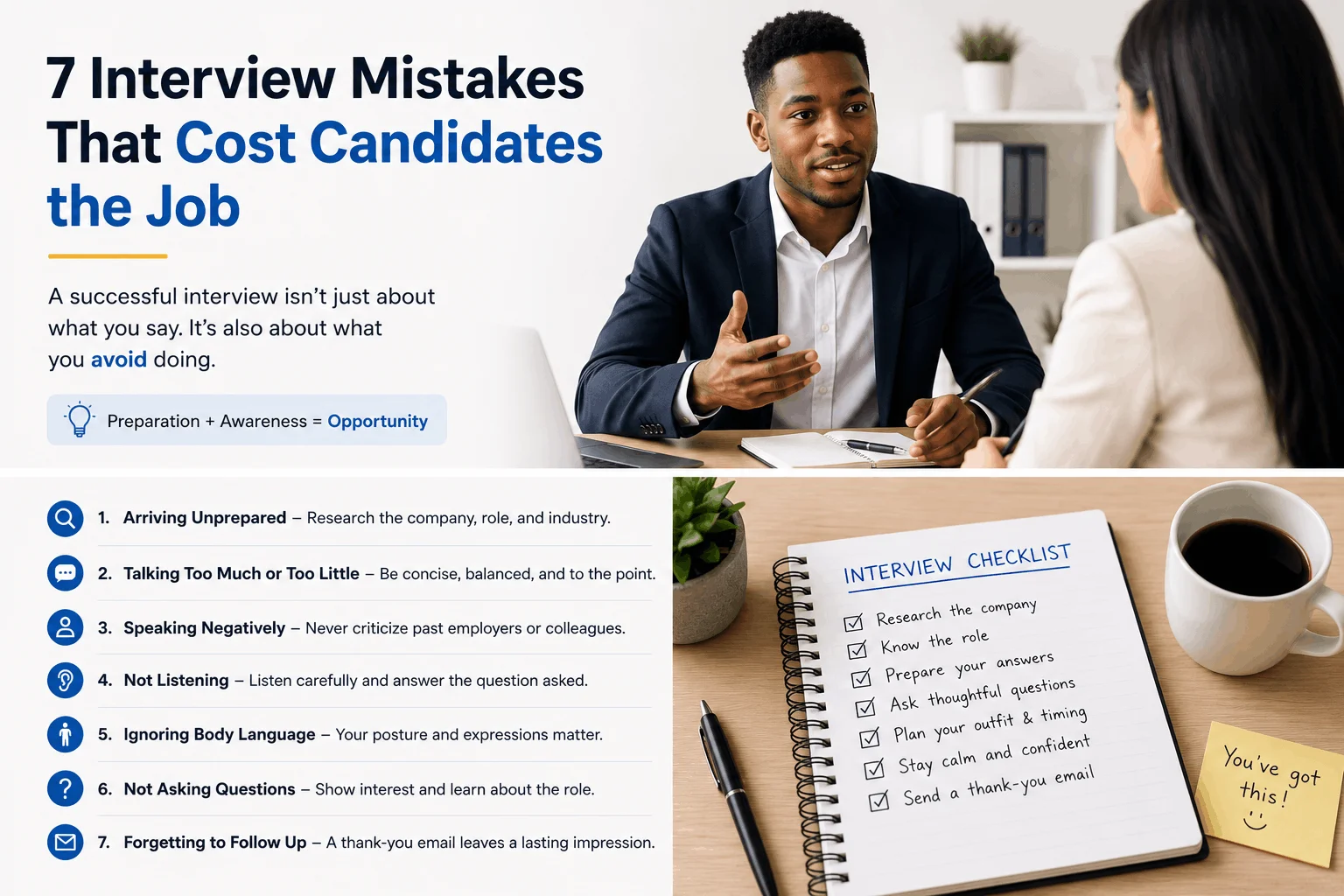
Your Pre-Interview Checklist
How to Help Your Expertise Show up. Just ask yourself before your next interview:
- ✔ Did I research the company?
- ✔ Can I describe why I would be interested in the position?
- ✔ Are there any examples of my skills or experience (I have prepared them)?
- ✔ Any good-faith questions you have for me to ask?
- ✔ Have I scheduled my journey or tested my internet speed for an online interview?
- ✔ Am I dressed appropriately?
- ✔ Have I gone through several common interview questions, have I practiced answering them out loud?
Assuming you can respond “yes” to these questions, you will walk into your interview completely confident.
Final Thoughts
When applying for your first job, interviews can feel intimidating. The bottom line is that interviewers don’t seek perfection. So they are seeking a person who is prepared at least in part – but also has the mindset and experience needed to believe they are capable of doing so. A lot of interviews are also learning. And even when you don’t get in, you’ll feel more confident, communicate better and be well positioned for the next opportunity.
A perfect interview rarely offers the chance for success. It’s from failure and from learning and from improving and from sticking it out.
Frequently Asked Questions
How soon should I come for a job interview? Arrive 10 to 15 minutes in advance. It is also a space for you to settle into the experience while not appearing rushed.
Do I have to say I don’t know? Yes. Better to be honest than to guess. You could explain how you would approach something, or say you are open to learning.
Can I ask questions at the finish of the interview? Yes. Asking thoughtful questions shows interest in the role and helps you decide if this kind of company matches up with what kind of job you want to have done for yourself.
Could a polite thank-you note help? It doesn’t ensure you’ll be offered a job, sure, but it is more than just a thank-you card — it will be a professional show of appreciation for the interviewer’s time.

