
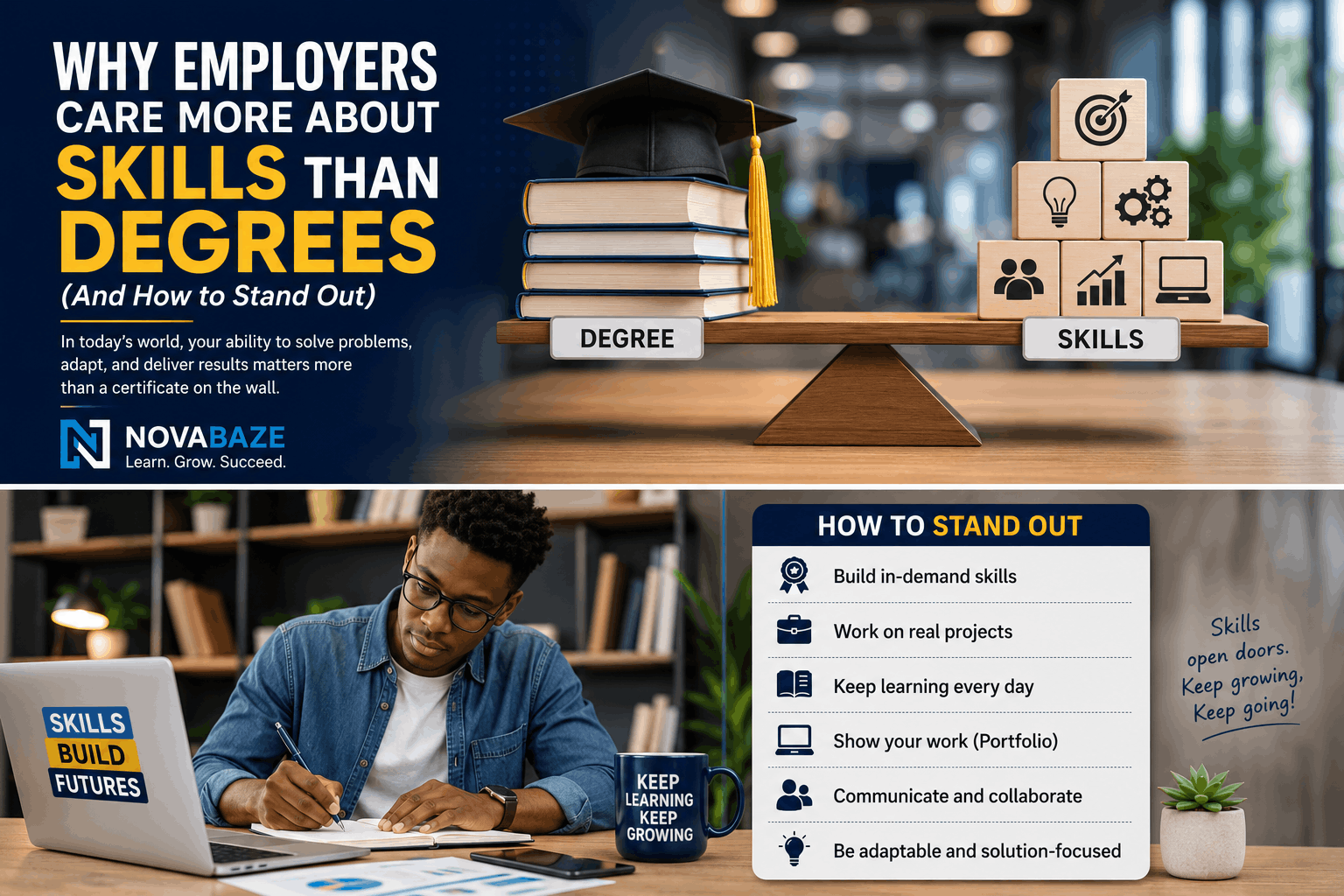
A college degree can open the doors. But once you’ve stepped in, employers frequently want to know more: Can you really do the job (Skills )..? This is a question some graduates do not necessarily expect to encounter.
If you study for years, it is normal to think that getting a degree is exactly the most difficult challenge college grads have to face. But to this day, a lot of folks learn the job market demands far more than educational credentials. That’s not because the meaning of an undergraduate degree isn’t there anymore. That’s largely because today’s workplace moves at an accelerated pace, and employers expect people to have the capability to learn, apply knowledge, solve problems, communicate effectively, and adapt to new technologies. If you are a recent grad, for example, knowing the difference can really give you a leg up — or at least a lift.
Do Degrees Still Matter?
Yes, they do. There are professions across different disciplines — medicine, engineering, law, and teaching, to be sure — that require formal qualifications. A degree also shows dedication, discipline, and the ability to accomplish long-term ambitions.
But in many professions, specifically in tech, marketing, design, business, and digital media, employers are likely to look past what is listed on a certificate. Even a degree could get you shortlisted. That often hinges on your skills if you’re hired.
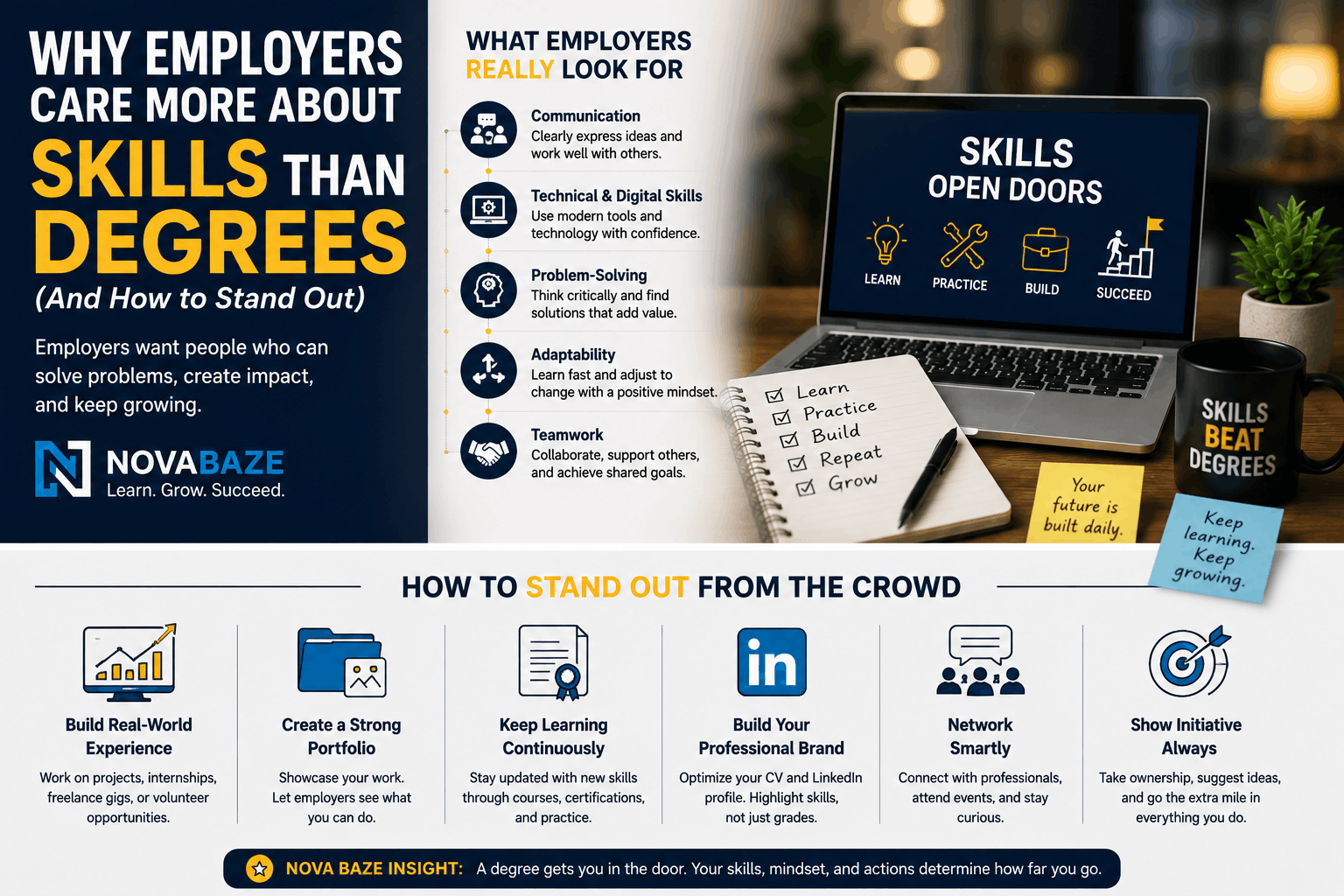
What Employers Really Want
Imagine two candidates you’re hiring. They both graduated from well-recognized institutions. One confidently writes of group projects, talks about their solutions to problems during the internship period, and shares work samples from the past. The other only lists their degrees and grades. Which candidate would you remember?
Most employers are looking for individuals who can demonstrate what they know — not just what they studied.
NovaBaze Insight 💡
A qualification tells an employer what you’ve learned. With your skills, they know what you can achieve. Both are important; one is easy to demonstrate in an interview.
Skills That Set Candidates Apart
You don’t have to be perfect in every kind. And with a couple of skill sets taken on while you are learning they will all yield a huge benefit. Some of the most precious are:
Communication. Effective communication — the capacity to explain ideas clearly, write professionally, and talk to others — takes you to nearly every job.
Digital Skills. Knowing something about using tools like Microsoft Excel, Google Workspace, Canva, or project management software could get you a long way ahead in productivity on day one.
Problem-Solving. Applicants who stay cool-headed, think critically, and find their solutions rather than take orders will do well by employers.
Adaptability. Technology changes quickly. In a world where learning new tools and getting used to change are among the best things for modern workplaces, people are more than happy with anything.
Teamwork. Few jobs are done well in isolation. Employers see the importance of respectful working with others.
Experience Does Not Always Come With Work
The biggest issue for graduates is this: “No one hires me. How can I get experience?” It’s a fair question.
But the good news is experience can take on many forms. You gain useful experience by:
- Personal projects.
- Volunteering.
- Freelancing.
- Student leadership roles.
- Internships.
- Open-source contributions.
- Online certifications.
- Community events and workshops.
It encourages initiative and a culture of learning – and these are often qualities employers value.
Building a Portfolio, Not a CV: Develop It All
A resume tells employers where you’re from and what you’re known for. A portfolio helps them see your work. But it may be something like a portfolio, as relevant to your area of interest:
- Coding projects.
- Graphic designs.
- Research papers.
- Writing samples.
- Marketing campaigns.
- Data analysis projects.
- Business presentations.
Projects are useful even to the minimum extent beyond making a long list of responsibilities.
Keep Learning After Graduation
It’s not the end to getting an education. It is just like a beginning in many fields. And the professionals who continue to learn remain competitive, as they hang onto what they learn. That may not be the same as obtaining a different degree. It could mean:
- Completing an online course.
- Learning new software.
- Attending workshops.
- Reading industry news.
- Practicing new techniques.
The constant learning means employers know you’re prepared to expand as your profession evolves.
Do Not Underestimate Soft Skills
Technical skill may also save it in the interview. But soft skills often bring you many more accomplishments when you are hired — and a good job makes them more successful. Suppose only consider your colleagues who enjoy working with you. Generally, they are responsible, polite, eager to learn, and articulate. They are difficult to teach and revered in every workplace.
What Very Few Job Seekers Are Getting Right
Many people believe they need dozens of certificates to search jobs before applying. Not necessarily. Hitting up the certificates without a hands-on application is typically just to the level of employers to be honest. A candidate with just one qualification with some application experience on the job stands out more than someone with 10 certifications but a past of non-applied to the role.
Focus on learning. After that, just learn how to implement what you learned.
A Career Readiness Checklist
Prior to your next job application, ask yourself:
- ✔ Can I explain what skills I have that this role requires?
- ✔ Have I completed one or more projects that showcase those skills?
- ✔ Is my CV relevant to the job I’m applying for?
- ✔ Does my LinkedIn profile reflect professional skill?
- ✔ Beyond my major, am I in pursuit of learning?
If a few of those questions leave your answer as “no,” don’t consider that a failure. See it as a roadmap for next steps you can take to get better.
Final Thoughts
A degree is still valuable. It is years of hard work, expertise, and growth. But employers today want more than paper qualifications. They want people who are curious and flexible and ready to contribute. The good news is that much of those characteristics come into being long before you ever start working full time.
- Start building your skills now.
- Start small jobs.
- Keep up the practice.
- Stay curious.
Your degree might be the first door open — but it’s often your skills, attitude, and desire to grow that pull you through.

